Breed profile
Dominique
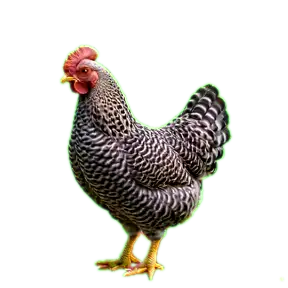
America's oldest breed, and the Plymouth Rock's parent. Barred, rose-combed Dominiques were widespread in the eastern United States by the mid-1800s, and the 1870 show rules that split rose-combed birds from single-combed ones are where the Plymouth Rock got its lane. Production is honest rather than spectacular: the hatchery estimates 150 to 220 brown eggs a year, and published figures land right around 200 at 58 grams each. The rose comb is the northern keeper's quiet advantage.
The egg numbers
| Eggs per year (first laying year) | 150–220 |
|---|---|
| In-lay rate | ≈3–4 a week |
| Egg weight | 58 g |
| Strain note | The hatchery estimates 150-220 eggs per year for its Dominiques; another published figure runs about 200 brown eggs a year averaging 58 g. |
| Egg color | brown |
| Egg size | large |
| Starts laying | 20–26 weeks |
Body and climate
| Form | standard |
|---|---|
| Strain | heritage |
| APA class | American |
| Comb | rose |
| Leg feathering | clean |
| Leg color | yellow |
| Bird size | large |
| Skin color | yellow |
| Recognized varieties | One recognized plumage coloration: cuckoo, sometimes called 'hawk' coloration, a regular pattern of light and dark (not black-and-white) barring. |
| Conservation status | Watch |
| Weeks to maturity | 20 |
| Mature hen weight | 5 lb |
| Mature rooster weight | 7 lb |
| Weight note | The hatchery flock lists 5 and 7 lb; the standard range is 4-5 lb for hens and 4-6 lb for roosters. |
| Cold hardiness | excellent |
| Heat tolerance | good |
| Climate note | Tight plumage plus the rose comb gives better resistance to frostbite than some other breeds. |
Character
| Temperament | A calm, heritage dual-purpose bird. |
|---|---|
| Disposition | excellent |
| Free range | best |
| Meat production | better |
| Foraging | good |
| Broodiness | low |
| Broody note | One table rates Dominiques not very likely to sit; another page lists Broody: Yes — plan on an incubator rather than a broody if chicks are the goal. |
| Good first breed | Yes |
What this means for your setup
Lighter than a Rock at 4 to 5 pounds per the standard, so coop math is a notch easier. The frostbite-resistant rose comb and tight plumage make the Dominique a sensible pick for hard-freeze country where a Leghorn's comb would need winter care. Broodiness data wasn't in either source's summary, so don't build a hatching plan around them.
Gear that fits this breed
Coop Size Calculator
turn 5-lb hens into coop, run and roost numbers
Egg Calculator
turn the 150–220 egg-a-year range into a hen count
Best Coops for Cold Climates
a cold-excellent breed earns the winter-spec picks
Dominique FAQ
How many eggs do Dominiques lay a year?
Hatchery estimates run 150-220 eggs per year; published breed figures describe about 200 brown eggs averaging 58 g.
How are Dominiques different from Barred Rocks?
Comb and build: the Dominique has a rose comb and a lighter, more compact body, while the Plymouth Rock has a single comb. The two were formally split by show rules in 1870.
Are Dominiques cold-hardy?
Their tight plumage and rose comb give better frostbite resistance than some other breeds, which is the comb-risk half of winter hardiness.