Breed profile
Buff Orpington
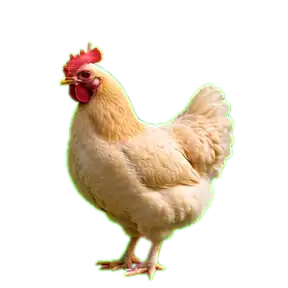
The gentle giant of the backyard. Orpingtons came over from England in the late 1800s and became one of the classic American farm fowls; the buff variety is still the one most families meet first, and the hatchery page calls them a perfect family bird. Hens run 8 pounds, roosters 10, with the heavy full plumage that makes them excellent winter layers, shelling brown eggs through cold weather when lighter breeds back off. Two things to plan around: that mass asks for shade and constant water through a heat wave, and the first egg shows up at 5 to 7 months, later than the production breeds.
The egg numbers
| Eggs per year (first laying year) | 200–280 |
|---|---|
| In-lay rate | ≈4–5 a week |
| Egg weight | 53 g |
| Strain note | University extension chart band 200-280. A modern published average runs about 180 light brown eggs at 53 g, with a historic claim of up to 340 before breeders selected for looks over utility. |
| Egg color | brown |
| Egg size | large |
| Starts laying | 22–30 weeks |
| Winter laying | strong |
| Persistence | First egg arrives later than the production breeds (5-7 months). |
Body and climate
| Form | standard |
|---|---|
| Strain | heritage |
| APA class | English |
| Comb | single |
| Leg feathering | clean |
| Leg color | pinkish white |
| Bird size | extra large |
| Skin color | white |
| Recognized varieties | Seven colour varieties recognised by the Poultry Club of Great Britain: black, blue, buff, cuckoo, jubilee, spangled and white. |
| Weeks to maturity | 20 |
| Mature hen weight | 8 lb |
| Mature rooster weight | 10 lb |
| Weight note | Hatchery flocks average 8 lb hens and 10 lb roosters; standard ranges run 6-8 lb hens and 8-10 lb males. |
| Cold hardiness | excellent |
| Heat tolerance | good |
| Climate note | Heavy, full plumage makes them excellent winter layers right through cold weather, and the spec table grades cold tolerance excellent with heat tolerance good — in a heat wave, that mass and plumage is still what to manage. |
Character
| Temperament | Large, stately birds of quiet disposition; a family bird. |
|---|---|
| Disposition | best |
| Free range | better |
| Meat production | good |
| Broodiness | high |
| Broody note | Excellent setters and mothers. |
| Good first breed | Yes |
What this means for your setup
Size everything one notch up. Eight-pound hens want the generous end of the coop-size calculator, roost lumber sized for big birds, and a pop door that fits them. Broodiness is a feature to plan around: Orpingtons are excellent setters and mothers, which pauses the eggs but hatches the next generation for free. If your plan is eggs, not chicks, a way to break up a sitting hen (or a spare nest to isolate her) belongs on the shopping list next to the feeder and waterer.
Gear that fits this breed
Coop Size Calculator
turn 8-lb hens into coop, run and roost numbers
Egg Calculator
turn the 200–280 egg-a-year range into a hen count
Best Coops for Cold Climates
a cold-excellent breed earns the winter-spec picks
Best Heated Waterers
strong winter laying only pays off if the water isn't frozen
Brooder Temperature Chart
a broody breed hatches chicks, and chicks need the week-by-week heat schedule
How Much Space Chickens Need
heavy fowl are the reason the generous end of the space math exists
Buff Orpington FAQ
When do Buff Orpingtons start laying?
Later than the production breeds: 5-7 months of age, per the hatchery breed FAQ. Spring chicks mean first eggs in the fall.
Are Orpingtons good winter layers?
Yes. Their heavy, full plumage makes them excellent winter layers, shelling brown eggs right through cold weather.
Do Buff Orpingtons go broody?
Often, and they are described as excellent setters and mothers. Broodiness pauses laying for that hen but hatches chicks if you want them.