Breed profile
Plymouth Rock
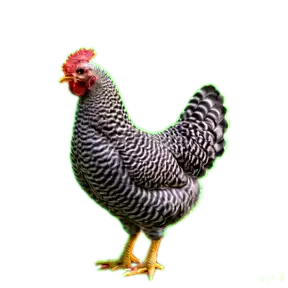
The barred lady of American farmyards. Plymouth Rocks date to 1869 Massachusetts, and the Barred variety is still the one most people mean when they say "Barred Rock". The extension chart rates them at 200 to 280 brown eggs a year, and the hatchery describes a solid, plump bird that ends up a heavy roasting fowl. If you want one breed that splits the difference between the Leghorn's output and the Orpington's temperament, this is the classic compromise.
The egg numbers
| Eggs per year (first laying year) | 200–280 |
|---|---|
| In-lay rate | ≈4–5 a week |
| Egg weight | 55 g |
| Strain note | University extension chart: 200-280. Another published figure runs roughly 200 large brown eggs of about 55 g in a laying year, and the hatchery spec table adds a breeder-flock three-year average of 225. |
| Egg color | brown |
| Egg size | large |
| Starts laying | 20–24 weeks |
Body and climate
| Form | standard |
|---|---|
| Strain | heritage |
| APA class | American |
| Comb | single |
| Leg feathering | clean |
| Leg color | yellow |
| Distinguishing features | the most widely kept US chicken breed for much of the early twentieth century · barred was the original plumage pattern; other colors were added later |
| Bird size | large |
| Skin color | yellow |
| Recognized varieties | Ten plumage varieties listed by the Entente Européenne; five recognized by the Poultry Club of Great Britain: barred, black, buff, Columbian and white. |
| Weeks to maturity | 20 |
| Mature hen weight | 7.5 lb |
| Mature rooster weight | 9.5 lb |
| Weight note | Hatchery flock scale; standard minimums run 7.5 lb for cocks, 6.5 lb for hens. |
| Cold hardiness | excellent |
| Heat tolerance | good |
| Climate note | The hatchery breed description: hardy, dual-purpose birds whose hens are not discouraged by cold weather. |
Character
| Temperament | Calm and steady; a classic family farm bird. |
|---|---|
| Disposition | better |
| Free range | better |
| Meat production | better |
| Broodiness | low |
| Broody note | The spec table rates Barred Rocks not very likely to sit. |
| Good first breed | Yes |
What this means for your setup
At the hatchery scale, hens run 7.5 pounds, so feed the coop size calculator the same generous numbers you would an Orpington. Cold weather does not slow them, which makes winter water heating the winter chore that matters, not the birds. Broodiness is not something either source flags for this breed, so don't count on a Rock to hatch your replacements.
Gear that fits this breed
Coop Size Calculator
turn 7.5-lb hens into coop, run and roost numbers
Egg Calculator
turn the 200–280 egg-a-year range into a hen count
Best Coops for Cold Climates
a cold-excellent breed earns the winter-spec picks
How Much Space Chickens Need
heavy fowl are the reason the generous end of the space math exists
Plymouth Rock FAQ
How many eggs do Plymouth Rocks lay a year?
The extension laying chart puts them at 200-280 brown eggs a year; another published figure runs about 200 large brown eggs in a laying year.
Are Barred Rocks cold-hardy?
Yes. The hatchery description calls the breed hardy and says the hens are not discouraged by cold weather.
How big do Plymouth Rocks get?
Hatchery mature birds average 7.5 lb for hens and 9.5 lb for roosters; the standard minimums are 6.5 and 7.5 lb.