Breed profile
Polish
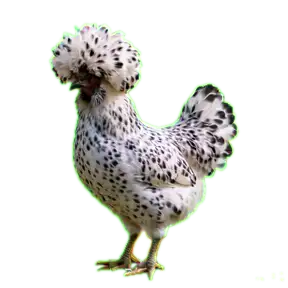
The punk-rock crest with the quiet personality. Polish birds carry a V-shaped comb under an abundant crown of feathers, and the hatchery description pairs that dramatic look with a docile, curious nature. Egg output is honestly second billing: one hatchery table lists 150 a year, another grades production Good with medium white eggs, and breed references call it a fair layer at best today. People order Polish for beauty first and eggs second.
The egg numbers
| Eggs per year (first laying year) | 150 |
|---|---|
| In-lay rate | ≈3 a week |
| Strain note | One spec table lists Rate of Lay 150/Year with pee-wee-sized white eggs; another grades production Good with medium eggs. The count now has a number behind it, though the two hatcheries disagree on egg size. |
| Egg color | white |
| Egg size | medium |
| Starts laying | 20–26 weeks |
Body and climate
| Form | standard |
|---|---|
| Strain | heritage |
| APA class | Continental |
| Comb | V-shaped |
| Leg feathering | clean |
| Leg color | slate/blue |
| Distinguishing features | abundant crest that may hide the V-shaped comb · bearded, non-bearded and frizzle varieties |
| Bird size | medium |
| Skin color | white |
| Recognized varieties | Three colour varieties in the first APA Standard of 1874, with more added in 1883, 1938 and 1963. |
| Conservation status | Recovering |
| Weeks to maturity | 20 |
| Mature hen weight | 4.4 lb |
| Mature rooster weight | 6 lb |
| Weight note | Standard: males 2.75 kg (6 lb), females 2 kg (4.4 lb) for large fowl. |
| Cold hardiness | poor |
| Heat tolerance | excellent |
| Climate note | The hatchery Q&A: Polish 'are not very cold hardy. They are more of a heat tolerant breed.' The spec table grades heat tolerance excellent and cold tolerance poor. |
Character
| Temperament | Docile, curious, and entertaining, but the crest can block part of their vision, so they may startle if approached too quickly. |
|---|---|
| Disposition | better |
| Free range | poor |
| Meat production | poor |
| Broodiness | rare |
| Broody note | Both hatchery tables agree: Non Setters, and Broodiness: No. |
| Good first breed | Not the easiest pick |
What this means for your setup
The crest is the care plan. The hatchery warns that the feathering can block part of the bird's vision, so Polish startle easily and do best with calm handling and a predator-aware run rather than open free range. They're listed as non-setters, so no brooding plans here. Keep them with gentle companions; a crested bird that can't see an incoming peck sits low in the pecking order by default.
Gear that fits this breed
Coop Size Calculator
turn 4.4-lb hens into coop, run and roost numbers
Egg Calculator
turn the 150 egg-a-year range into a hen count
Polish FAQ
How many eggs do Polish chickens lay?
One spec table lists 150 a year; another grades production Good with medium white eggs, and breed references call it a fair layer at best today. Expect ornamental-breed output, not hybrid numbers.
Do Polish chickens go broody?
Rarely. The spec table lists them as Non Setters, so chicks come from an incubator or a broody hen of another breed.
Why does the crest need special care?
The hatchery notes the crest can block part of their vision, so Polish may startle if someone approaches too quickly or silently. Covered runs and calm handling are the standard advice.