Breed profile
White Leghorn
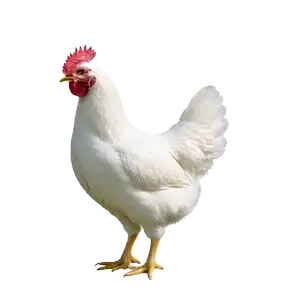
The white-egg machine of the poultry world. The extension chart has White Leghorns at 250 to 300 eggs a year; the Pearl White production strain averages 280 to 360, the top figure on any chart I cross-checked. They get there cheaply: a 4.5-pound hen simply eats less than an 8-pound Orpington, and the hatchery rates the breed's feed-to-egg conversion excellent. The trade is handling and cold: very active, sometimes flighty birds, with a big single comb that needs frostbite care in hard-freeze country.
The egg numbers
| Eggs per year (first laying year) | 250–300 |
|---|---|
| In-lay rate | ≈5–6 a week |
| Egg weight | 55 g |
| Strain note | University extension chart: 250-300. The Pearl White production strain averages 280-360, the highest published figure; the eggs run at least 55 g (Large class and up). |
| Egg color | white |
| Egg size | large |
| Starts laying | 15–18 weeks |
| Persistence | Continues laying 10 to 12 weeks longer than most good layers. |
Body and climate
| Form | standard |
|---|---|
| Strain | production strain |
| APA class | Mediterranean |
| Comb | single or rose |
| Leg feathering | clean |
| Leg color | yellow |
| Bird size | medium |
| Skin color | yellow |
| Recognized varieties | Ten colours recognised for single-combed large fowl in the US (six for rose-combed), and ten varieties in Italy. |
| Conservation status | Recovering (Non-Industrial lines) |
| Weeks to maturity | 18 |
| Mature hen weight | 4.5 lb |
| Mature rooster weight | 6 lb |
| Weight note | Pearl White production-strain scale; the hatchery page prose has pullets at about 4 lbs. |
| Cold hardiness | good |
| Heat tolerance | excellent |
| Climate note | Hatchery FAQs: very cold-hardy, tolerates heat well too. The catch is that big single comb, which is frostbite-prone; the standard suggestion is a coat of petroleum jelly on it for hard-freeze nights. |
Character
| Temperament | Very active, can be flighty; does well with ranging. |
|---|---|
| Disposition | poor |
| Free range | good |
| Meat production | better |
| Foraging | good |
| Broodiness | rare |
| Broody note | Hatchery tables list Leghorns as non-setters. |
| Good first breed | Not the easiest pick |
What this means for your setup
Lean toward the run, not the coop: cover the run, mind fence height, and the coop itself can be modest since the birds are light. Winter is the pinch point. That single comb is frostbite-prone, so draft-free ventilation and a coat of petroleum jelly on the coldest nights are the standard care per the hatchery FAQ. Skip broody plans entirely; these are non-setters. The quiet bonus shows up at the feed store, where the excellent feed conversion keeps the cost per dozen down.
Gear that fits this breed
Coop Size Calculator
turn 4.5-lb hens into coop, run and roost numbers
Egg Calculator
turn the 250–300 egg-a-year range into a hen count
Coop Ventilation in Winter
a big single comb plus stale winter air is the frostbite recipe; this is the breed that punishes getting ventilation wrong
White Leghorn FAQ
How many eggs do White Leghorns lay a year?
250-300 on the extension laying chart. The Pearl White production strain averages 280-360, the highest published figure.
Are Leghorns flighty?
They can be, and the hatchery breed FAQ says so plainly: very active birds that do well with ranging. Plan taller fencing and expect them to keep more distance than an Orpington would.
Do White Leghorns go broody?
Rarely. Hatchery tables list them as non-setters, so chicks from a Leghorn flock come from an incubator, not a broody hen.