Chicken Coop Ventilation in Winter: How Much Air, and What to Never Close
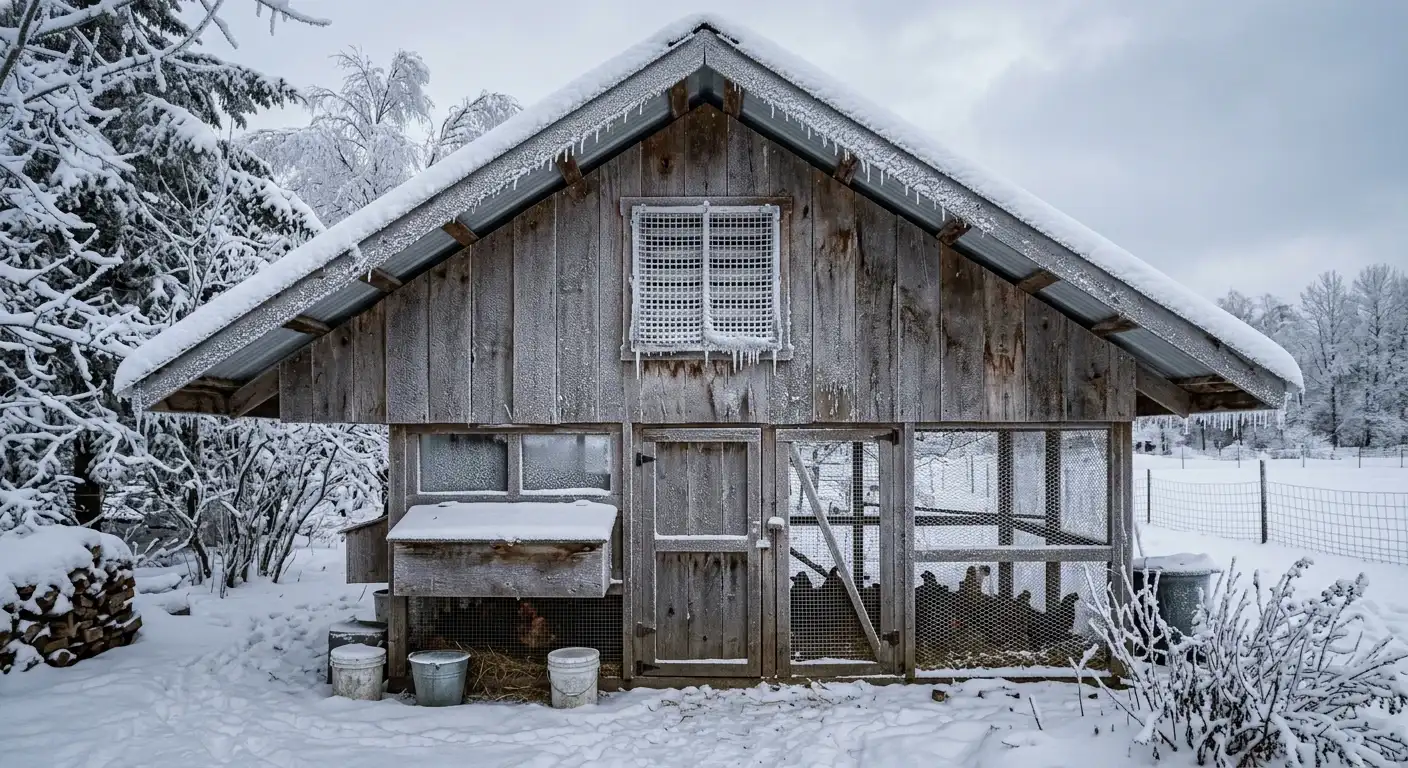
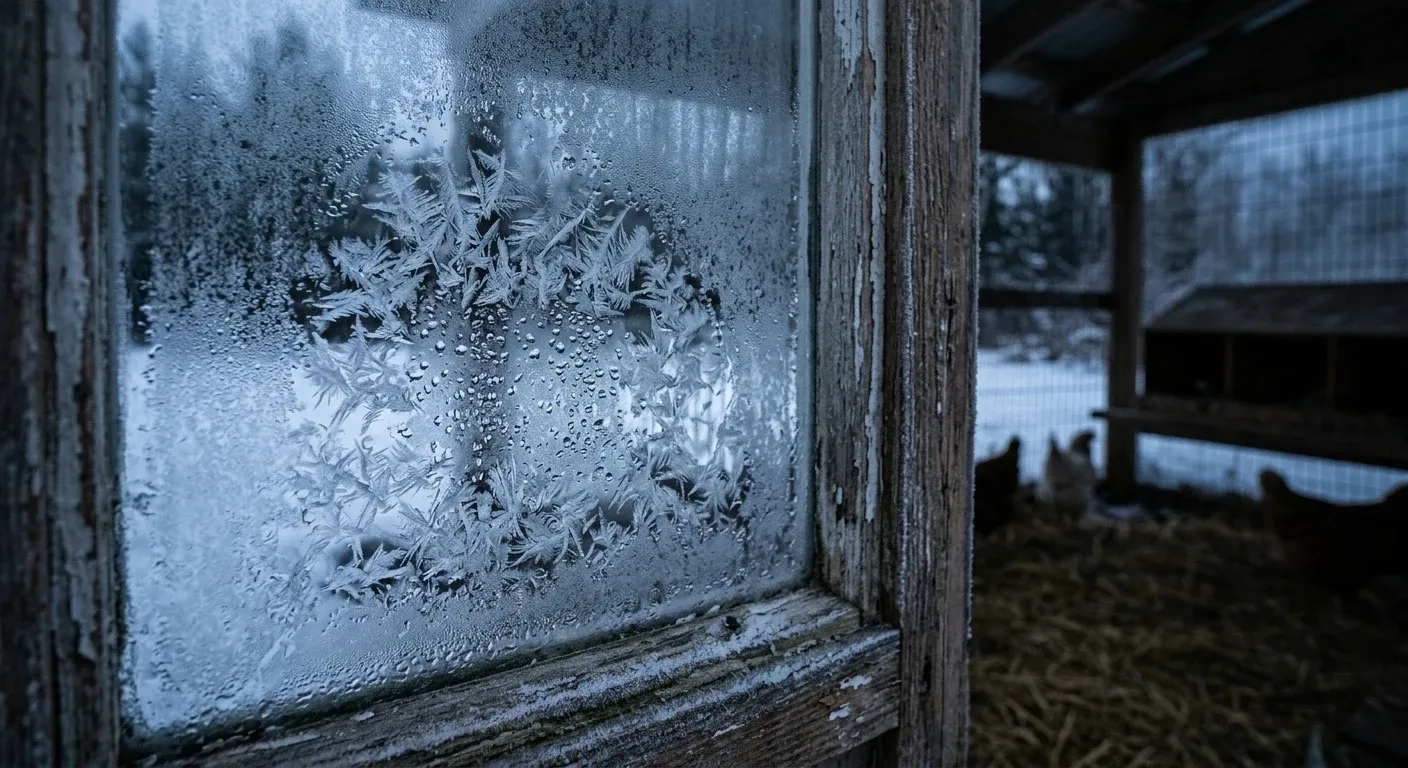
The glass fogs on the inside first. Then comes the frost, then the ammonia bite at your knees when you crouch down to check the roost. Every November my feed fills with the same photo from the chicken groups: a coop window glazed with ice on the inside, and a worried caption underneath it.
The instinct that follows is forgivable. Cold is coming, so button the coop up. That instinct is what frosts combs. A winter flock suffers from trapped moisture and stale air long before it suffers from cold. A feathered bird is built for dry, still, freezing air, and it is defenseless against damp. The fix runs the opposite direction from the instinct: winter wants more open vent area, placed higher, and never closed.
This guide is the answer I give in those threads now, because every one of them ends up in the same two places. How much air does the coop actually need? And what, if anything, gets shut on the worst night of the winter? With numbers attached.
Three morning signs the air is failing
The flock files out at dawn. Give the coop two minutes before the sun warms anything, and it will tell you everything about its air. Three signs carry almost all the weight.
| Sign at dawn | What it means | First move |
|---|---|---|
| Fog or frost on the inside of windows and walls | Moisture is hitting cold surfaces because the air is not exchanging | Open more vent area, high up |
| Ammonia smell when you crouch to bird level | Droppings are off-gassing into still air, and your nose reads a lower dose than the birds get | More air exchange, plus clear under the roost |
| Darkened, swollen edges on combs and wattles | Overnight moisture settled on the coldest tissue in the room | Fix the ventilation before anything else |
Extension guidance ties the first sign to the fix in one sentence: “If there is condensation on windows or uninsulated walls of the coop in the morning, ventilation must be increased to keep the coop dry.” Not decreased. Increased. On the coldest clear mornings, a healthy coop shows dry glass, dry walls, and combs that look the same as they did in October.
Why the windows fog: three pounds of water a day
A laying flock is a humidifier with a feed bill. The math that settled the question for me is Alabama Extension’s laying-hen numbers: a hen eats roughly 0.25 lb of feed a day, and chickens “consume twice as much water (by weight) as they do feed.” That is half a pound of water per hen per day. Six hens, three pounds of water, every single day, most of it leaving the birds again as droppings and breath. My first foggy November, I blamed the waterer. The birds were doing most of it on their own.
Three pounds of water is about a quart and a half. Picture pouring that into a cold cooler every evening, clapping the lid on, and expecting the inside to stay dry. Nobody would expect it to work. But that is the deal a sealed coop offers. December stretches the lock-in to 14 hours, with moisture production running the whole time. eXtension’s frostbite page names all three inputs: “Chickens generate a great deal of moisture from their breathing, feces, and water spillage.” The waterer counts. So does the puddle around it, which by January could pass for a duck pond, if the drinker lives inside.
The physics of the escape route is on your side, though. Warm air holds more moisture than cold air, and warm air rises. That is the entire engine of natural ventilation, as eXtension’s small-flock ventilation page lays it out: air enters high, picks up warmth and moisture at ceiling level, and leaves high. In winter, in the page’s own words, “the amount of fresh air brought in should be just sufficient to allow for adequate air exchange.” The exchange runs day and night whether you watch it or not. Close the exits and the three pounds has nowhere to go but onto the coldest surfaces in the room: the glass, the nail heads, and the combs.
Ventilation is high and slow. A draft is low and fast.
Half the confused threads each winter are one question wearing different hats: keepers told to “ventilate” and also told to “eliminate drafts,” sometimes in the same sentence. The two instructions sound contradictory. They are not. They describe two different places in the room.
Ventilation replaces the air above the birds. A draft replaces the air around them. Openings at the roofline do the first, silently, all night. Any opening that pushes moving air across the roost bar does the second, and that is the one to hunt down and close. Penn State’s small-flock guidance asks for exactly two things of a winter coop: limit drafts, and limit moisture. High vents handle the moisture. Roost placement handles the drafts.
The test costs nothing. On the windiest day of the month, open the pop door, walk in, and stand exactly where the roost is, for a full minute. Air moving on the back of your neck is moving on the birds all night. That opening gets baffled or blocked. Everything above it stays open.
How much open area is enough
Here is the honest part, and I went looking before I believed it: no extension service publishes a per-bird vent-area number for backyard coops. The eXtension housing overview says only that for small coops, “windows or vents on one side of the house usually provide plenty of ventilation.” That line assumes birds spending their days outdoors. A winter flock lives indoors around the clock, so the “usually” goes out the pop door with the sunshine.
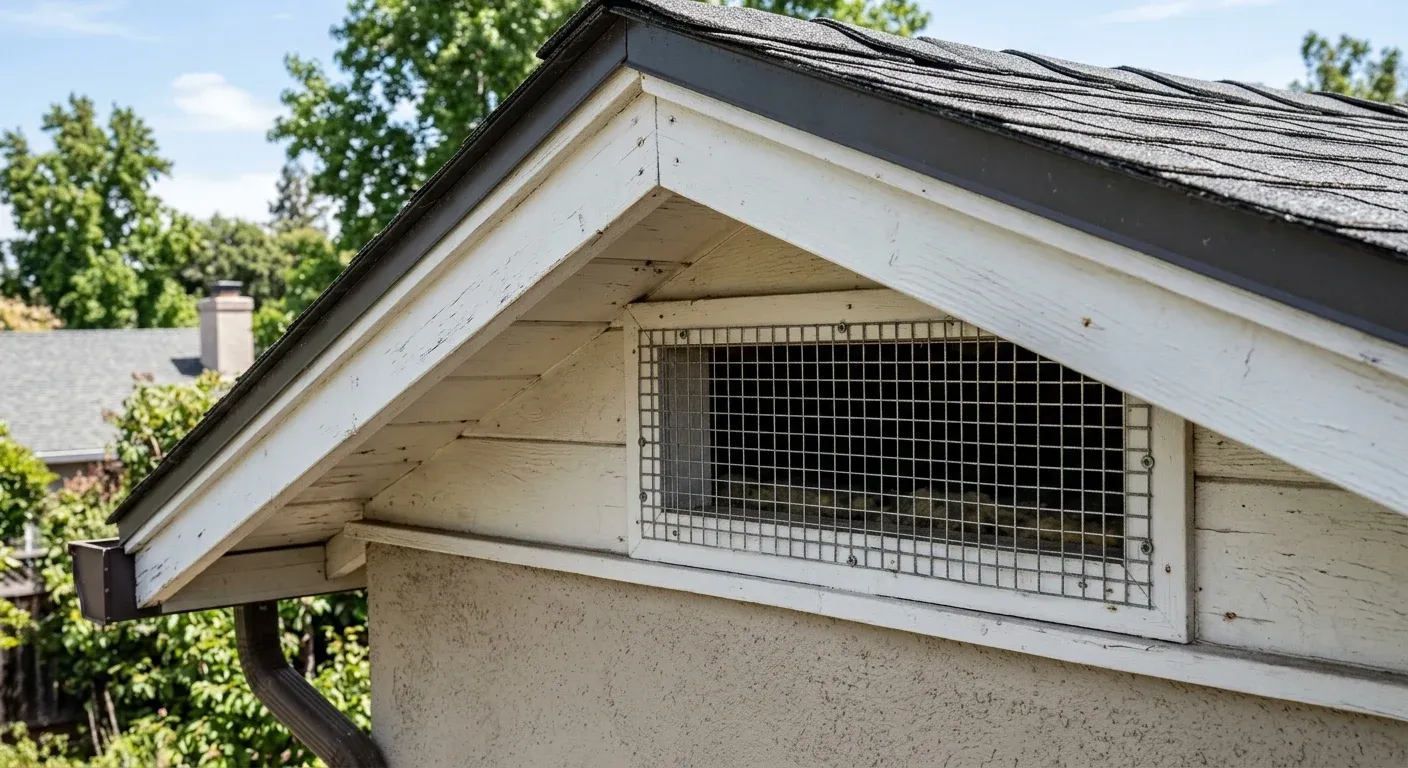
What exists instead is a community number, repeated across keeping forums for years: “The rule of thumb is one square foot of ventilation per bird,” as one long-running thread puts it. For a six-hen flock that means about 6 sq ft of open vent area, roughly two 12-by-36-inch slots up at the gables. Set that number next to the two stamped slits most prefab coops ship with. The title of the community’s classic essay starts making sense fast: chicken keepers have been told for over a decade to go out there and cut more holes.
Does that much opening freeze the birds? The same thread has a data point. A keeper worried that the coop, with its roofline vents open, ran barely warmer than the run, days ahead of a brutal cold snap. One reply came from someone just finishing that exact stretch of weather:
“Just went through multiple -20f to -33f days and nights. All chickens and ducks were hale and hearty, running around enjoying the warm weather today, only 0f.”
Vents open at the roofline, down to −33°F, birds fine. The reply’s own two qualifiers deserve keeping: “Breed matters. Direct drafts matter.” Treat the 1 sq ft per bird as a starting point rather than a building code. A big cold-hardy flock in a dry winter may be fine under it, and a damp maritime winter may want more. The three morning signs above are the real gauge, because they read your own coop instead of an average one.
The weekend fix: tune it or cut it
Every under-ventilated coop is one of two projects, and the morning signs tell you which.
Tune the vents you have when
- openings above roost height already exist
- the dawn fog burns off by mid-morning
- the roost sits out of the moving air
- signs show up only on the coldest mornings
Cut new holes when
- vents sit at roost level or below it
- frost coats the walls, not just the glass
- ammonia reaches your knees at dawn
- the coop shipped with two stamped slits
Tuning is hardware-store work: barrel-bolt sliders or a windward baffle, an evening with a drill. Cutting is scarier and smaller than it looks. A jigsaw, a gable-end triangle at the peak, a holesaw row tucked under the eave: one afternoon, mark to done. Whatever opens gets covered in half-inch hardware cloth, stapled tight and framed with furring strips. An open hole is a door until it is covered, and raccoons and rats work nights too.
Coop type moves the project around a little. Prefab wood kits are the usual patient, since their vent area is the first thing value-engineered away. If I were coop shopping this winter, vent area is the spec I’d ask about first, precisely because no listing prints it. Our 6-hen coop guide flags ventilation as the feature that separates a two-winter coop from an 18-month one. Plastic coops like the Eglu Cube arrive with engineered channels that already run above roost height, which is a real part of their cold-climate case. A shed conversion has the most wall to work with and the least excuse. And if the actual question behind the project is insulation or a heater, that decision belongs to the cold-climate coop guide, moisture math and fire risk included.
The coldest night of the year
The night that worries everyone is the one where the forecast shows a number with a minus sign. Here is the working order, top to bottom.
What closes: the pop door, any window flap at bird level, any low opening on the windward wall during the storm. Cardboard and a staple gun are the traditional emergency material on the forums, and they are fine for a week of polar vortex.
What never closes: the roofline path. The moisture clock does not pause for the forecast. Fourteen hours of flock locked inside still loads the air, and the coldest night is precisely when the surfaces are most eager to grab it. If wind screams straight into a gable vent, baffle it, turn the opening away, but leave the exit open. That baffle is a job for a dry October afternoon, as far as I’m concerned. Nobody rigs one well at midnight with the forecast already biting. Freezing still air is survivable to a bird wearing down. Damp air does the damage, and the roofline vents are how it leaves.
One more winter moisture source deserves the walk of shame: the waterer. Spilled drinking water is the third input on eXtension’s list, so winter water belongs in the run’s sheltered corner where possible. A setup that cannot spill inside beats one that can. The whole winter-water decision, heaters included, is its own guide: heated chicken waterers.
FAQ
Should I close the coop vents at night in winter?
Not the high ones. Vents above roost height never blow on the birds, so they cost nothing but a little escaping warmth. The vents worth closing at night are the low ones and anything aimed at the roost bar. Close those year-round.
Why is the inside of my coop window wet or frosted in the morning?
The flock’s breath and droppings loaded the air overnight, and the moisture had nowhere to go but onto the coldest surface. Extension guidance is explicit that morning condensation means ventilation must increase, on the coldest mornings most of all.
My coop is barely warmer than the run. Is that normal?
For an unheated coop, yes, and it is fine. The birds are wearing down coats; the job of the building is dry, still, fresh air. Warmth is the birds’ own department. Keepers ride out serious cold snaps in coops vented at the roofline, at near-outdoor temperatures, with healthy birds. What that thermometer does not show you is the moisture leaving with the air, which is the part that matters.
Can a coop have too much ventilation?
At the roofline, rarely; the classic regret runs the other way. At roost level, yes. Moving air across the roost is a draft, a different problem from stale air, and it shows up as birds huddled at the far end of the bar. Dry litter and clean combs mean the balance is right, wherever the vent area landed. I’d rather defend six open vents to a worried neighbor than nurse a frostbitten comb.
Do I need a fan in the coop for winter?
Usually not at backyard scale. A high inlet and a high exit do the same job for free, all night, in the coldest weather. A fan only enters the conversation for big walk-in sheds where air has to travel ten feet or more. Even there it is a supplement to the vent path, never a replacement. Fix the openings first.
Omlet Eglu Cube Review: What $1,399 Actually Buys
Omlet's Eglu Cube starts at $1,399 with no run, needs no maintenance, rolls on wheels, and handles winter. It's our standout pick in its price bracket.

What Killed My Chickens? A Guide to the Five Ways In
Predators get in five ways: dig, reach, squeeze, drop in, or work the latch. Read the signs, match the fix, one weekend at a time.