Safe Chicken Coop Heaters: What Actually Qualifies
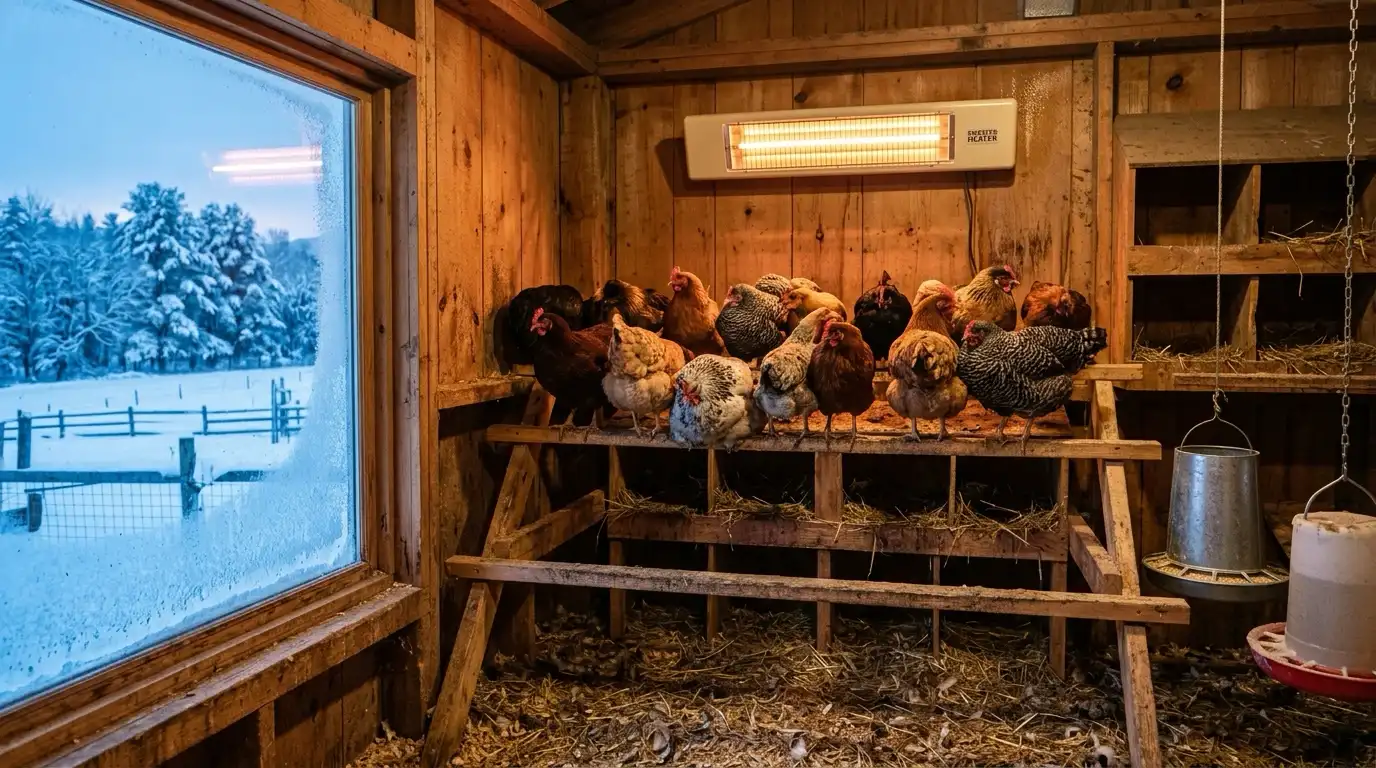
The forecast will pull its usual November trick sometime in the next few weeks: the low drops fifteen degrees overnight and stays there. Ours did it last week. My oldest asked whether the chickens get cold. I gave the honest answer—I didn’t know—and went to read: extension guidance, fire research, every spec sheet I could find for chicken-coop heaters, and more forum threads than I can defend spending a weekend on.
Here’s my conclusion up front: in most circumstances, your coop shouldn’t have a heater. Not because heaters are scams, but because the birds don’t need one—and the fire data is hard to ignore. This guide is for the smaller group facing a genuine exception. For them, the question isn’t “Which heater is best?” It’s “Which heater is actually safe?” Product listings use that word far too freely, so let’s pin it to a checklist and score five real panels against it.
Most coops don’t need heat. Yours probably doesn’t either.
UNH Extension puts it plainly in its winter-care guidance: “In most circumstances, we advise against adding supplemental heat to your chicken coop.” The reasoning is familiar to anyone who has kept birds through a real winter: a heat source beside combustible bedding creates a fire risk, while chickens are built to handle cold. Their feathers trap plenty of heat; damp is the real problem.
That’s the point to remember before spending anything: frostbite is usually a moisture problem, not a temperature problem. Extension’s frostbite guidance links it to wet, stagnant air. In practice, that makes the winter priorities clear: airflow up high and dry bedding down low. We cover the full system in the cold-climates coop guide and the winter ventilation piece. Ventilation first, insulation second, heat last—and usually never. In most coops, the one winter appliance worth plugging in is the waterer; we cover that separately in its own guide.
Don’t take my word for “usually never.” The author of Fresh Eggs Daily winters a flock in central Maine, through temperatures far colder than anything my Ohio coop faces, and this article describes doing so without supplemental heat. The comparison I find most convincing comes from Lancaster Chicken Coops, which sells heated coops yet admits that “in a right-sized hen house, the chickens own body heat will keep them warm on most winter days and nights.” When a seller says the birds mostly don’t need heat, that’s about as neutral a verdict as this topic gets.
There’s one more argument against, and it’s the one that would stop me even in a genuinely cold setup. Birds acclimate as autumn deepens. A heated coop’s flock never does, and then the power goes out on the coldest night of February. The cold-hardy flock shrugs. The heated one is in trouble. A heater is a dependency you sign the flock up for.
The door UNH leaves open
So when is supplemental heat justified? UNH names one case in particular: small birds, “especially if you raise some smaller breeds.” Bantams, silkies—anything with less bird per feather—count here. The phrase that defines the equipment standard for this guide is worth quoting in full: “carefully using a specially designed heater for chicken coops with appropriate safety technology.”
Read that again. The extension service didn’t say “buy a heater.” It said buy one designed for this, with safety technology, and use it carefully, and their closing instruction doubles down: “With any supplemental heating, educate yourself about the risks and read all instructions and warnings carefully before installation.”
Even then, keep the goal modest. Lancaster, still selling the things, is candid about the ceiling: “Chickens typically do not like to be warmed to more than 50 degrees Fahrenheit in our experience,” and its rule is “never using a heat lamp.” A coop heater isn’t supposed to make the coop feel warm to you. If you can feel the difference from outside the door, something is wrong.
So heat clears the door only after ventilation and insulation have done their job, and only for a real exception: small breeds, a bird in recovery, or a winter your breed genuinely can’t ride out. Only then does buying become a safety checklist, and that checklist is the rest of this article.
What “safe” has to mean on a spec sheet
Product listings rarely define what they mean by “safe.” The closest thing to an authoritative standard is the National Fire Protection Association’s guidance: its heating equipment guidance and electric space heater tip sheet are written for homes, but the physics don’t change at the coop door. The Fire Protection Research Foundation’s review of fires in animal housing facilities shows why the stakes are higher: heating devices accounted for 33% of reported fires in the study. I don’t want to learn that a product listing exaggerated six feet from my kids’ bedroom window.
Drawing on NFPA’s checklists and cross-checking them against five manufacturers’ published specifications, I’d define “safe” with six requirements:
- Certified by a testing laboratory. NFPA’s own words: “Purchase a heater with the seal of a qualified testing laboratory.” That means a third party, not the brand’s confidence. Cozy Products lists ETL, K&H lists MET, Chickcozy lists UL and FCC. Two of the five panels I checked claim no certification at all.
- A thermostat and overheat protection. Straight off the NFPA checklist: “Choose a heater with a thermostat and overheat protection.” A heater that cycles itself off is a heater that can’t cook itself.
- A published surface temperature. This one isn’t on any official list, which is exactly why I’m adding it. A company that prints “our lens runs 160–180°F” is handing you a checkable number. A company that just says “safe warm radiant heat” is handing you an adjective. You’d be amazed how few print the number.
- Geometry that keeps distance. Keep the heater out of reach: suspend an overhead panel above roost height, use a perch warmer that touches only the birds’ shins, or mount a flat panel high on the wall. Distance is a design decision—and beats any coating.
- Straight into the wall. NFPA, verbatim: “Plug the heater directly into the wall outlet. Never use an extension cord.” Every joule these panels draw all winter runs through that connection. The outlet discipline is free.
- A cord the flock can’t reach. A coop is harder on cords than a living room: rodents and bored birds both pose a risk. Cozy Products ships its panel with a coil-shielded cord. Whatever you buy, plan the cable route before you buy.
Any heater that clears the gate gets scored below on all six. Two of them fail items the marketing would never volunteer.
The five panels, scored against the list
I checked every specification against the manufacturer’s product page this week. Prices change; the specs rarely do.
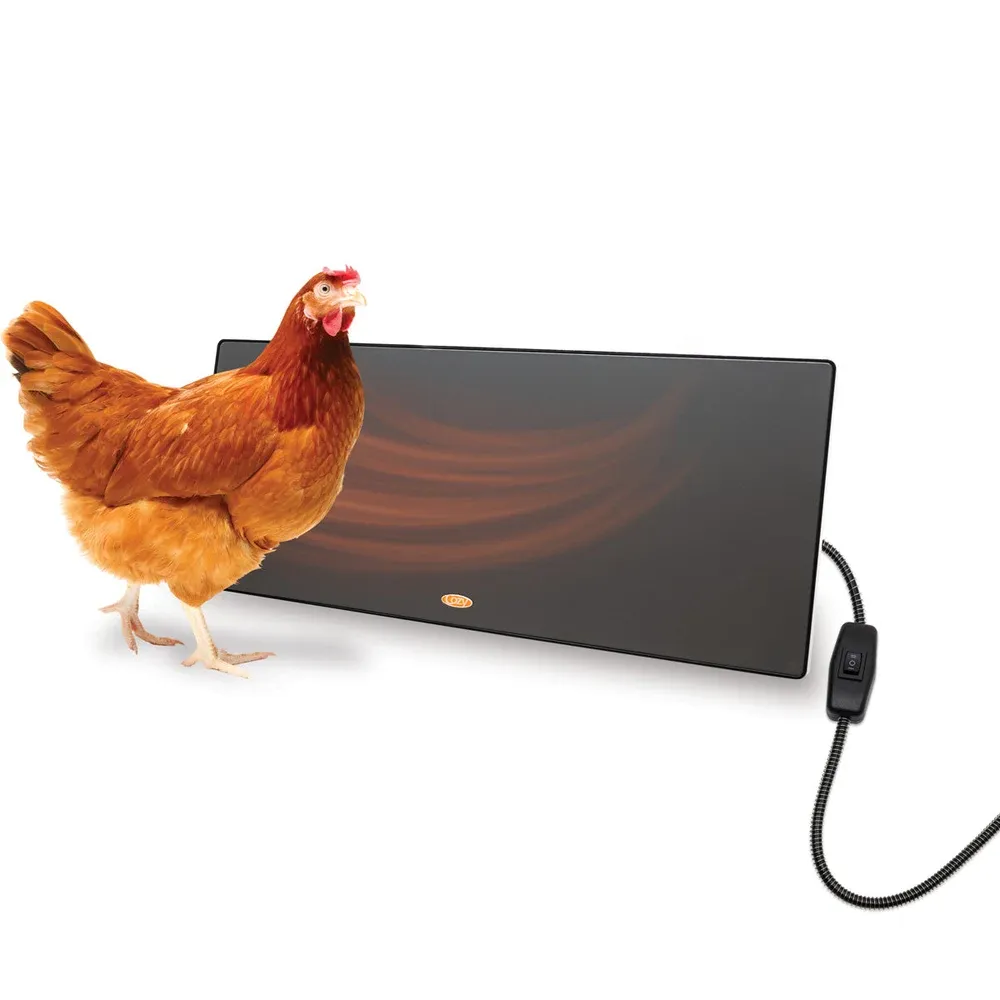
Cozy Chickens Coop Panel
at Cozy Products- Form
- wall-mount or floor
- Watts
- 150 W
- Certified
- ETL
- Thermostat
- none
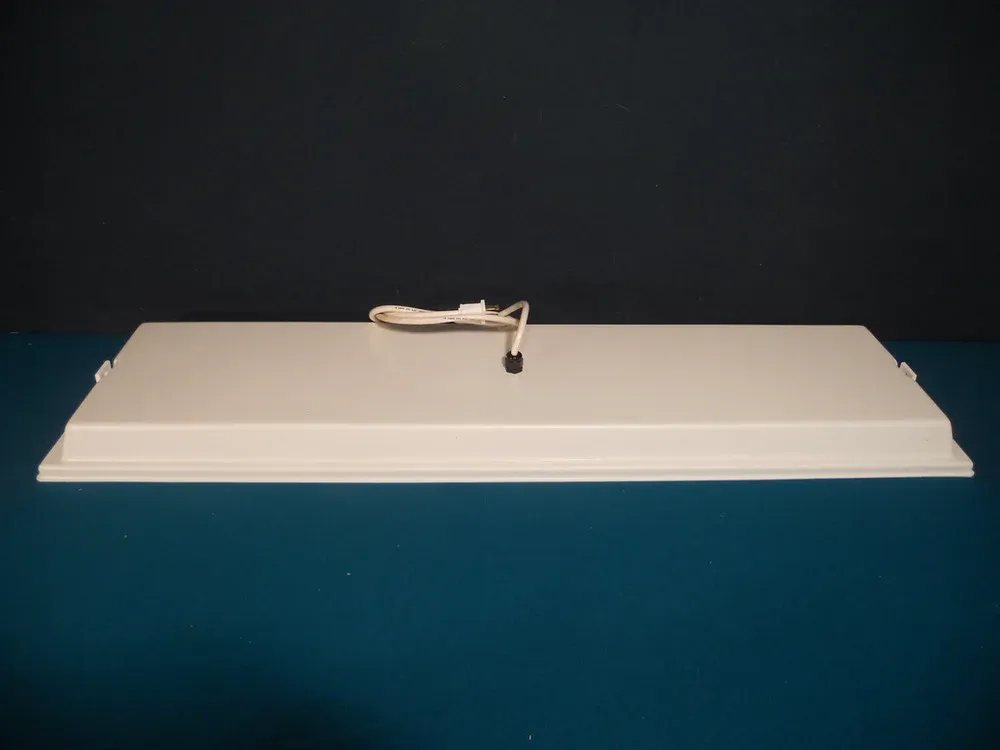
Sweeter Heater overhead
at Sweeter Heater- Form
- hung from ceiling
- Watts
- 32–150 W, 4 sizes
- Certified
- none claimed
- Thermostat
- none
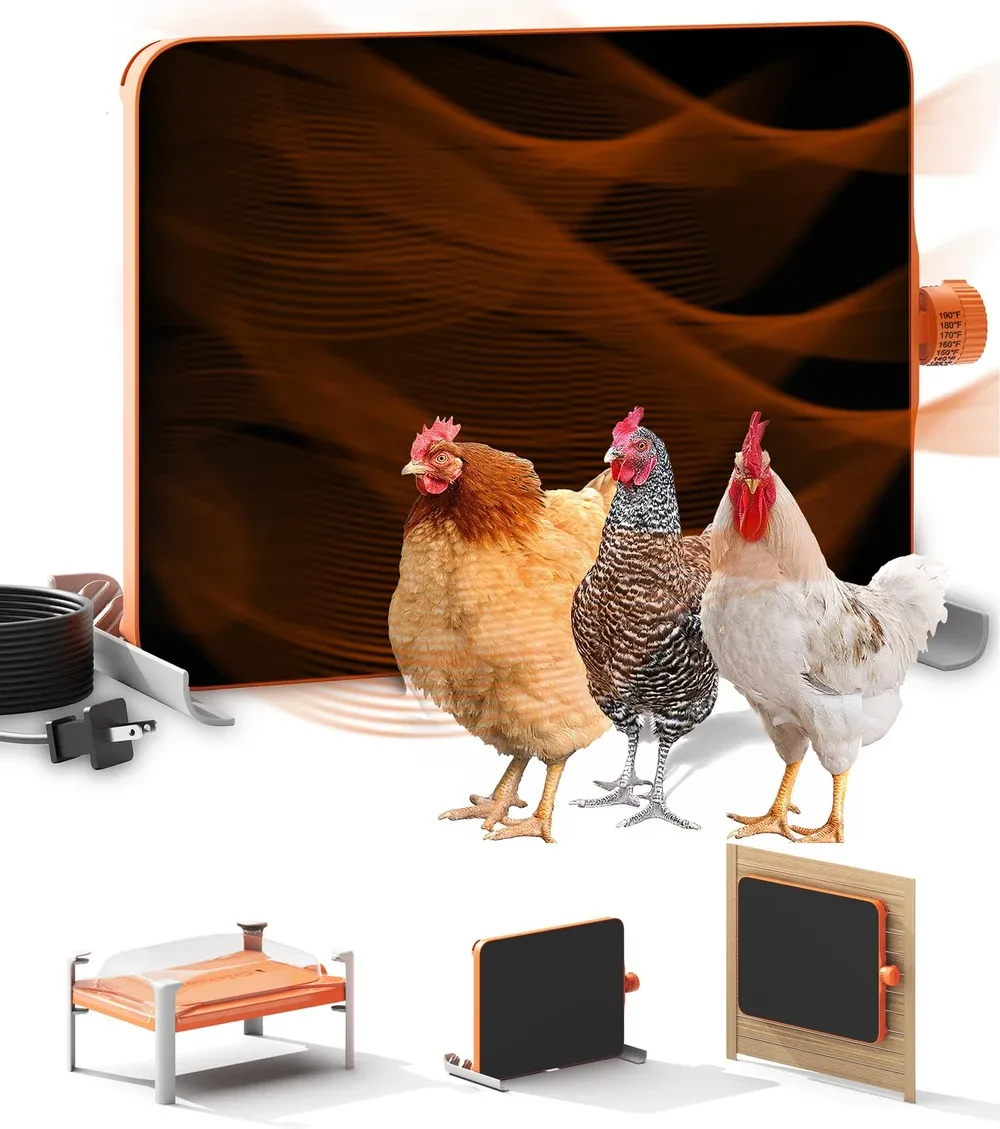
Chickcozy heater/brooder
at Chickcozy- Form
- panel, 3 mounting modes
- Watts
- 200 W
- Certified
- UL, FCC
- Thermostat
- adjustable, 70–191°F
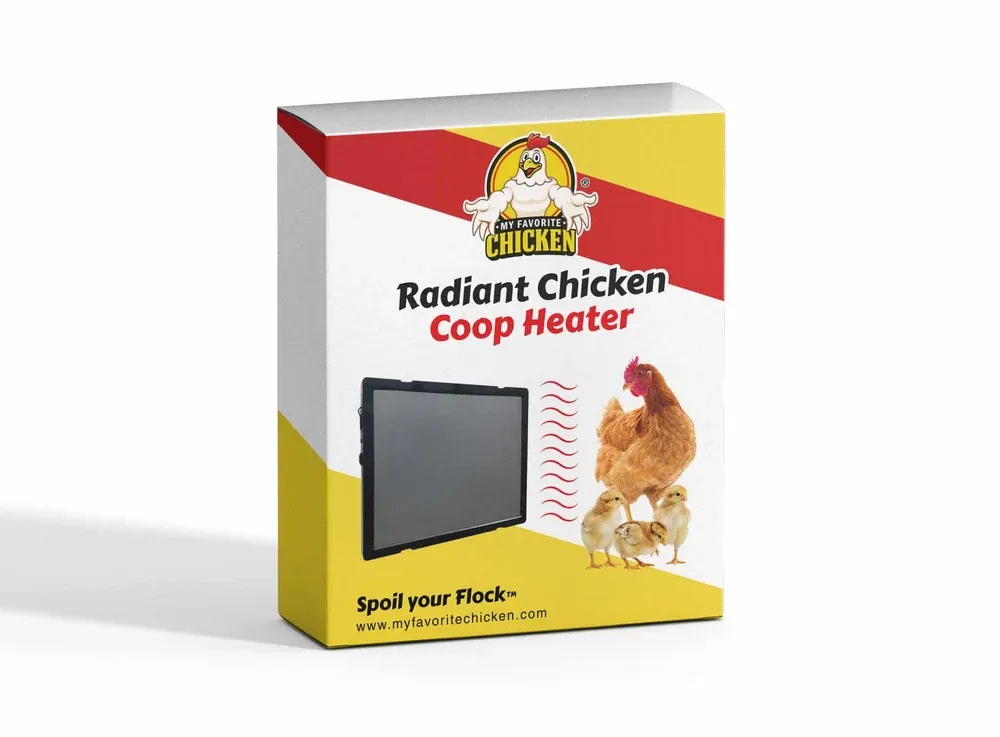
My Favorite Chicken radiant
at My Favorite Chicken- Form
- wall, floor, or horizontal
- Watts
- 100 W, 2 speeds
- Certified
- none claimed
- Thermostat
- low/high + shutoff
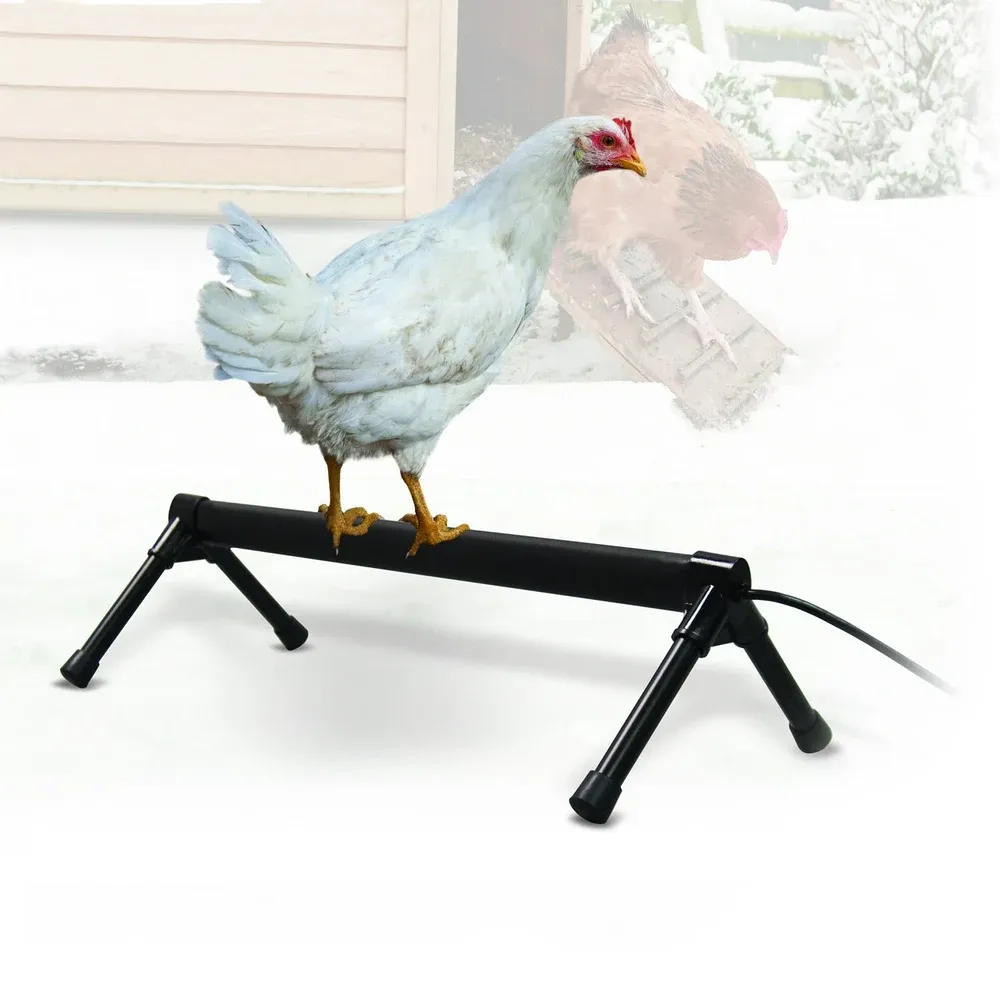
K&H Thermo-Chicken Perch
at K&H Pet Products- Form
- heated roost bar
- Watts
- 40 W / 55 W
- Certified
- MET
- Thermostat
- dual internal
What I’d actually buy
The Cozy Chickens panel, if you want the category’s default. It has the longest track record in this group, and its design has stayed simple. Two features set it apart: an ETL listing with a zero-clearance rating—meaning the maker says it can sit near combustibles—and a coil-shielded cord that addresses the rodent problem other listings rarely mention. At $59.99, it’s the cheapest full-size panel here. The drawback is the one I’d lose sleep over: no thermostat. Its 150 watts run continuously, all night, every night, driving up winter costs and adding wear to every component. I’d choose it for a small coop on a budget, but I’d add a thermostat plug the same afternoon.
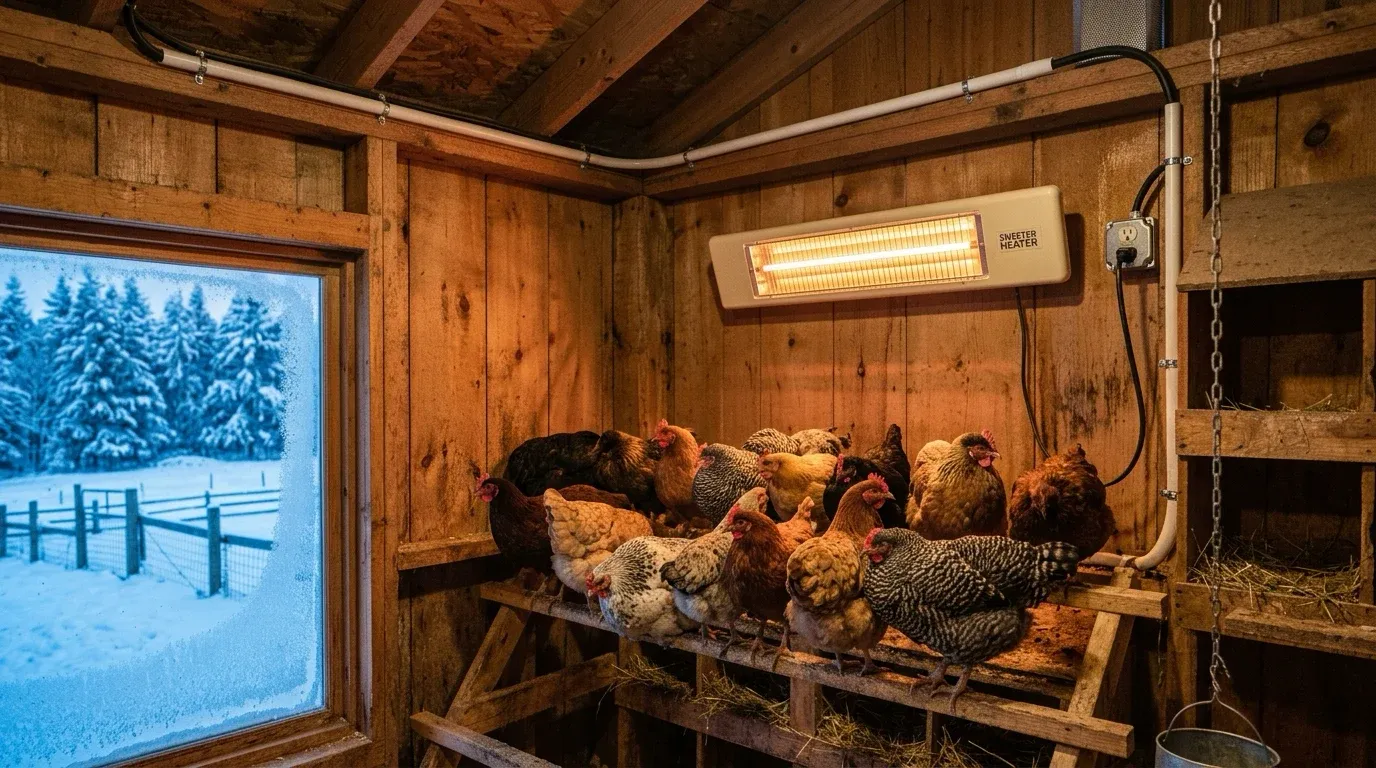
The Sweeter Heater, if the coop has headroom. Overhead placement is the smartest geometry in this guide, and Sweeter Heater is the only maker offering it as a line. Suspended from chains six to twenty inches above the birds, the heater directs warmth where they stand while keeping its hot surface out of reach. The company publishes a number most brands won’t: “The surface temperature of the lens will range from a safe 160–180 degrees (F),” and its fire-rated fiberglass lens avoids the exposed glass of a heat lamp. The warranty is three years—the longest here. The lack of third-party certification is a real gap: you’re relying on the materials story rather than a lab’s testing. It’s also the most expensive option at $113–161. I’d still choose it for a walk-in coop, where distance is a safety feature that never wears out.
The Chickcozy, for certification and control. It’s the only panel here to pair UL and FCC certification with an adjustable thermostat, which the company rates from 70 to 191°F. A built-in sensor throttles the wattage to hold the setting. At 200 watts, it’s the most powerful panel here—but the thermostat regulates its output. Designed first as a chick brooder and second as a coop heater, it can do both jobs with a change in mounting, which is useful if a spring brood is in your plans (the brooder side of that decision lives in our heat plate comparison). Two fair caveats: at $79.99, it’s the priciest wall panel, and its own collection page gives it a 3.6-star rating. It’s priced like a first-mover product, but carries more certification than most options here.
My Favorite Chicken radiant heater, for transparent specs. It’s the only panel here to publish both surface temperatures: about 131°F on low and 176°F on high. It also states plainly: “The metal panel becomes hot during operation and can cause burns on contact.” Numbers plus a burn warning—that’s honesty, even when the numbers are high. It offers low/high thermostat control and an emergency overheat shutoff for $59.99, but no third-party certification, the same gap as Sweeter.
The K&H Thermo-Chicken Perch, for one cold hen. This is the guide’s most frugal option: a MET-listed heated roost bar that warms the bird, not the coop air. It uses 40 watts (55 for the 36-inch model) and has dual internal thermostats. Because it won’t raise the coop’s air temperature, it’s a supplement, not a solution for a real cold snap. But if your concern is one cold hen, it’s the cheapest way to give a small flock a warm place to sleep—at about four dollars in electricity per winter.
The solar heater doesn’t survive the math
Search for “solar chicken coop heater” and you’ll find products promising exactly what winter makes hardest. The math tells a different story. Heating is a heavy load for a small solar setup: a 150-watt heater running through a twelve-hour winter night uses 1.8 kilowatt-hours. In a northern December, a 100-watt panel might produce only about half a kilowatt-hour on a good day, assuming four usable sun hours. That leaves roughly a four-to-one gap—just when you need heat most and sunlight is scarce. Batteries large enough to bridge it can cost more than the heater itself. Solar works better for small, intermittent coop loads: running a fence charger or a light, or keeping water moving. Space heating is beyond what a small setup can reliably support. If a listing says otherwise, check the wattage: either the math is missing or the promise is fiction.
What it costs to run
At the national average of about 15 cents per kilowatt-hour, a twelve-hour winter night makes the cost differences here mostly a story about thermostats. The K&H perch, cycling about half the time, costs roughly $4 over a 120-night winter. A 100-watt panel on low, with the same cycling pattern, comes to about $11. A thermostat-controlled 150-watt panel costs about $16. The Cozy has no thermostat, so it runs continuously and costs about $32. A 250-watt heat lamp—the option this guide is meant to steer you away from—costs about $54 while doing the job worse. Your electricity rate will vary; the proportions won’t. A thermostat can pay for itself, and the cheapest panel to buy isn’t always the cheapest to own.
Install it like the fire data assumes you did
Most of these precautions cost nothing, but every one matters. Mount the heater on a solid, flat surface or hang it from secure hardware, at least three feet from anything combustible. In a coop, that means accounting for bedding depth before installation. Run the cord directly to the outlet—never through an extension cord—and route it where beaks and teeth can’t reach. A GFCI outlet, which Sweeter Heater’s own FAQ recommends, is cheap insurance in a coop that gets washed down. NFPA advises turning portable heaters off when you leave a room or go to bed. A coop heater, by design, runs unattended overnight; that’s why the checklist emphasizes certification, thermostats, and overheat protection. When no one is there to switch it off, the heater must be able to switch itself off. NFPA 150 covers animal-housing facilities—a reminder that fire risk in these buildings is serious enough to warrant its own standard.
The verdict
If your coop is dry, well ventilated, and right-sized, skip the heater this winter and keep the money. If you have a genuine exception, I’d choose the Chickcozy for its certification and thermostat, the Sweeter Heater for a walk-in coop with headroom, the Cozy for a small coop on a budget, or the K&H perch for one cold hen. What I wouldn’t buy, at any price, is unchecklisted warmth: a lamp over bedding, a “safe” product with no numbers to back it up, or a solar rig promising July in January.
The forecast will pull its November trick again this weekend. Mine already did. The hens got their vent check and fresh bedding; I settled the heater question with numbers instead of worry. That’s the point of doing the reading before the cold arrives—not in the middle of it.
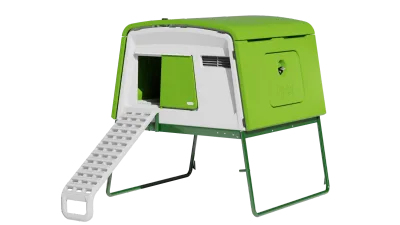
Omlet Eglu Cube Review: What $1,399 Actually Buys
Omlet's Eglu Cube starts at $1,399 with no run, needs no maintenance, rolls on wheels, and handles winter. It's our standout pick in its price bracket.
What Killed My Chickens? A Guide to the Five Ways In
Predators get in five ways: dig, reach, squeeze, drop in, or work the latch. Read the signs, match the fix, one weekend at a time.