What Killed My Chickens? A Guide to the Five Ways In
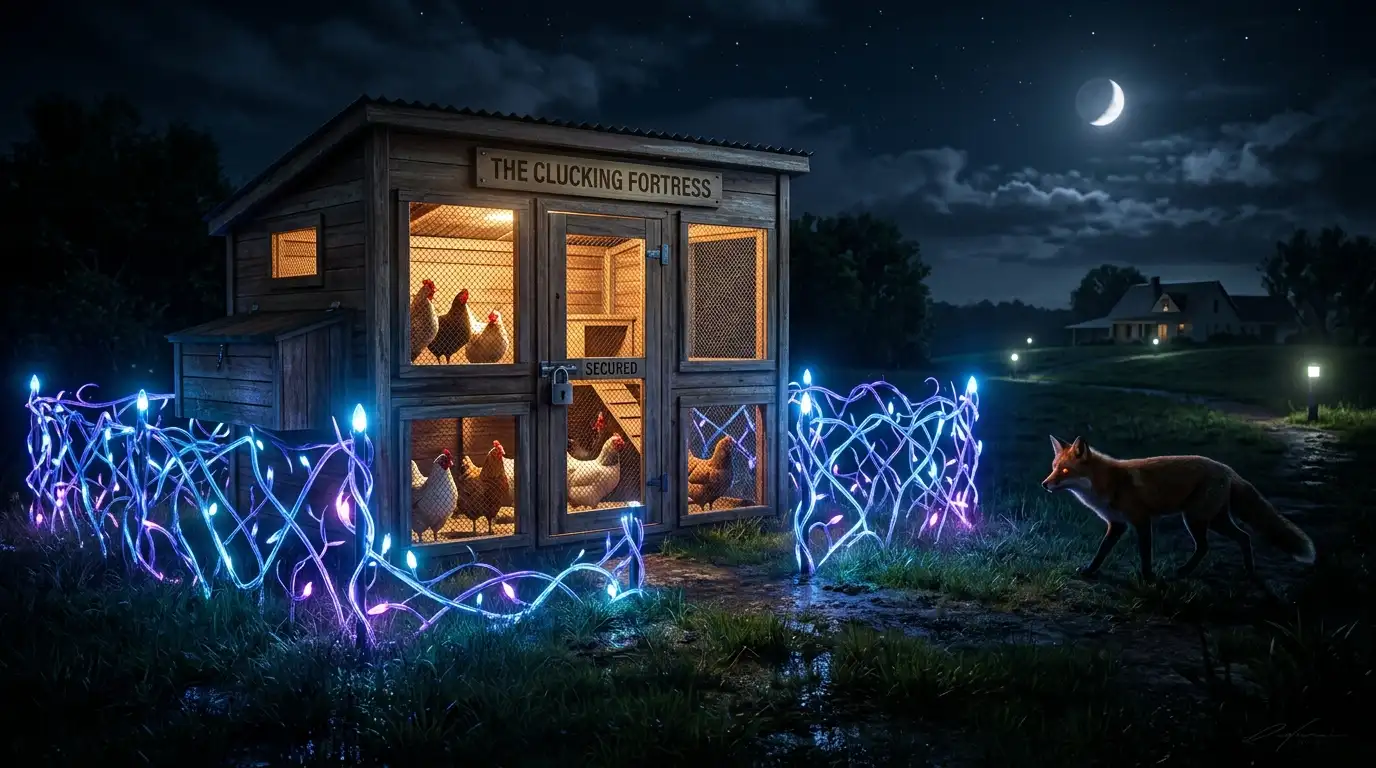
Have you ever opened the coop at dawn and counted heads out of habit? Have you come up one short?
Then you know the rest. A few feathers by the fence. A body with the head gone. Or nothing at all, just a gap in the wire you have walked past a hundred times without seeing it. One question sits under all of it: what did this?
The answer is smaller than the mess. Every loss comes down to five ways in. Something dug under. Something reached through. Something squeezed past a gap. Something dropped in from above. Or something opened the door.
That is good news, oddly. Five ways in means five fixes. Somebody has already measured every one of them. Below: how to read the signs, what stops each animal, and the order I would work in. That order assumes one weekend at a time, around a kid’s nap schedule.
First, look at what’s left
You fix faster when you know what you are fixing. Most predators leave a signature behind. You just have to read it.
Birds gone, nothing left. Feathers scattered where the bird stood, and no body. That points to a coyote or a fox. A bobcat drags its kill too, and can take a full-grown hen. Hawks and owls can carry a bird off, but a hawk usually eats where it lands.
A plucked patch in the open, breast eaten. A hawk. It fed where it killed. Feathers with flesh still on them mean a scavenger found the body later. Something else did the killing.
Heads gone, bodies left inside the run. That is the raccoon signature. A raccoon has front paws that work almost like hands. It can catch a bird through the mesh by the head and pull it hard against the wire. Then it eats only what fits through, which is the head. The rest of the body stays inside. On a bigger bird it takes a leg instead. The point: the wall was the weapon. Fix the mesh, not the bird count.
Dead birds, barely eaten, bitten everywhere. A dog. Dogs rarely eat what they kill. The chase is the point. One dog can kill a dozen birds in a few minutes and walk away from all of them. They work in daylight. That sets them apart from almost everything else on this list. Coyotes hunt in pairs, mostly at night, and they are far more likely to carry the bird off.
Dead birds with a bite at the skull, head and neck eaten, often piled neatly. Weasel. A least weasel is only 6½ to 8 inches long. It gets through a quarter-inch gap. Picture a pencil. That is the hole. Something that small, near the floor, did this. Quarter-inch wire closes it.
Only the eggs are gone. Shells by the nest with one end opened and the edges crushed: skunk. Eggs mashed into the nest with chewed bits of shell: opossum. No shells anywhere, and no holes in the coop: snake. A snake swallows eggs whole and then has to fit back out the way it came in. Raccoons take eggs too, but they carry them off first, up to 28 feet away.
Name the animal. Then the repair lands where the failure was. A tighter gate will not stop a raccoon that came in through the wall. That is money spent on the wrong hole.
The five ways in
They dig under it
Diggers skip the wire. They go under it, along the ground edge, where most runs are weakest. Twelve inches buried is the number every guide keeps landing on. The better ones dig a trench around the whole footprint and lay the cloth in it. Twelve inches is deeper than most people guess. Most kit coops ship with none of it.
If you cannot face a trench this season, you will see people lay the cloth flat on the ground instead, pointing outward from the wall. Like a skirt. The idea is that a digger hits wire before it reaches the wall. It is a common shortcut, and it may work. I cannot find anyone who has actually tested it, so I will not hand you a width. The trench is the method with numbers behind it.
They reach through it
A raccoon does not need to get in to kill. It works through the mesh. That is why wall mesh near the roost matters as much as the door. Half-inch hardware cloth on every wall a bird can sleep against is the standard in our six-hen coop guide. A raccoon can do real damage through a one-inch square. For mesh and gauge, the short answer is half-inch, 19-gauge. The long answer is our hardware cloth guide.
They squeeze past it
Weasels fit through a quarter-inch. So quarter-inch wire, or backing plates, belong at floor level and wherever else gaps run small. A quarter inch is the limit. Anything wider near a roost is a way in. Rats are the other squeeze threat, and a young one only needs a half-inch. Seal every hole past a quarter inch. Skip the lightweight hex wire while you are at it. It holds chickens in and nothing out. Snakes only count if you have eggs or chicks under a month old. Adults are safe from them.
Two more things help. Get the coop up off the ground. Then crawl under it once a season and look for holes. The gap you never looked at is the gap that gets used.
They drop in from above
Hawks work daylight. Owls work the night shift. If one has your yard on its route, a covered run is the simplest fix there is. One detail I would never have guessed: orange netting works best. Not because it is stronger, but because hawks and owls see orange. A loose cover still fails. Hawks push through soft spots, so the cover has to be tight. If one bird keeps coming back, go to welded wire instead of net.
Two cheaper habits help. Take out lone trees and other perches near the flock. Those are the places a hunter works from. And train the birds to come in at dusk by feeding and watering inside the coop. Then lockup is a habit for everyone, not a nightly rodeo.
They open the door
A raccoon’s front paws work close enough to hands that a slide bolt is a puzzle it solves for fun. Close and lock every door at night. Take “lock” literally. Use a latch that needs two moves, or a clip through the bolt so sliding is not enough. The test I use is opening it one-handed in the dark. If I can, a raccoon probably can too.
Night lockup is also where an automatic door earns its money. It deletes the “did I latch it” question at 9pm in the rain. Our automatic door guide covers which ones raccoons cannot work. Remember its one-layer rule, though. The door is one layer of a secure coop, not the whole defense.
| How they get in | Who it usually is | What stops it |
|---|---|---|
| Digging under | Dogs, coyotes, foxes, skunks | 12 in. buried, trench around the footprint |
| Reaching through walls | Raccoons | ½-in. hardware cloth on walls birds sleep against |
| Squeezing through gaps | Weasels, rats, snakes | No gap over ¼ in. near roosts; seal holes; raise the coop |
| Dropping in from above | Hawks by day, owls by night | Tight cover: orange netting, or welded wire for one bird |
| Working the latch | Raccoons | Two-step latch or clip through the bolt; locked every night |
What doesn’t actually fix it
A few popular ideas do not hold up. It is worth knowing which ones do something and which ones just feel like they do.
Lights and noise. A light on all night does not scare much, and it costs you eggs. Hens need a real dark stretch. Overnight light throws off laying. Predators also get used to noise fast. Motion lights, flags, pinwheels, scarecrows, and sprays still show up on every list of things to try. Fine, use them next to real barriers if you like. Just do not count them as the barrier.
Trapping your way out. If you are past barriers and into killing, call your state wildlife agency first. Do not handle it yourself.
Hawks and owls are protected by federal law. You cannot legally shoot, trap, or put one down, even when it is eating your flock. The legal fixes are the ones above, plus a call to your wildlife service.
Everything else depends on where you live. Some states let you kill a fox or raccoon caught harming poultry. Some let you kill a dog caught in the act. Yours may not. Check with your state wildlife agency before you assume.
One weekend, in order
Starting from a kit coop with a slide bolt and chicken wire? Here is the order I would work, cheapest first.
- Tonight, free. Lock the birds in and latch it right. Pick up feed and scraps before dark. Move the compost pile away from the coop. Food near the run is what brings the neighborhood past your wire at night. Mow and clear the area too. An open yard is a deterrent on its own.
- Weekend one, the wire. Half-inch hardware cloth over every opening a hand can reach. Fasten it with screws and washers, not bare staples. Our winter ventilation guide shows the pattern on vents. Replacing stock chicken wire? Half-inch 19-gauge is the roll to buy. Do one section at a time.
- Next, the ground edge. The trench from the digging section. It is the worst job on the list. It is also the one that stops the animals that never touch your latch.
- Then, the top. Netting or welded wire over the run, but only if hawks or owls are a real problem, not just a worry. The signs above tell you which you have.
- If losses keep repeating. Electric fencing comes up mainly for free-range birds, as movable netting you shift with the flock. The one number that matters is the power. Enough to stun an animal, not kill it. Sizing a setup for one predator is a talk with your local extension office, not a Saturday impulse buy at the farm store.
For cost: a clip for the bolt is pocket change. A roll of half-inch cloth and fasteners is real money. A trench weekend is sweat. Weigh all of it against what the flock is worth to you. The eggs, and the kids who named them. You can put a number on the egg side with our Flock Economics calculator. In my book the cloth wins every time. Replacing a laying flock starts the clock over on everything.
Wrapping up
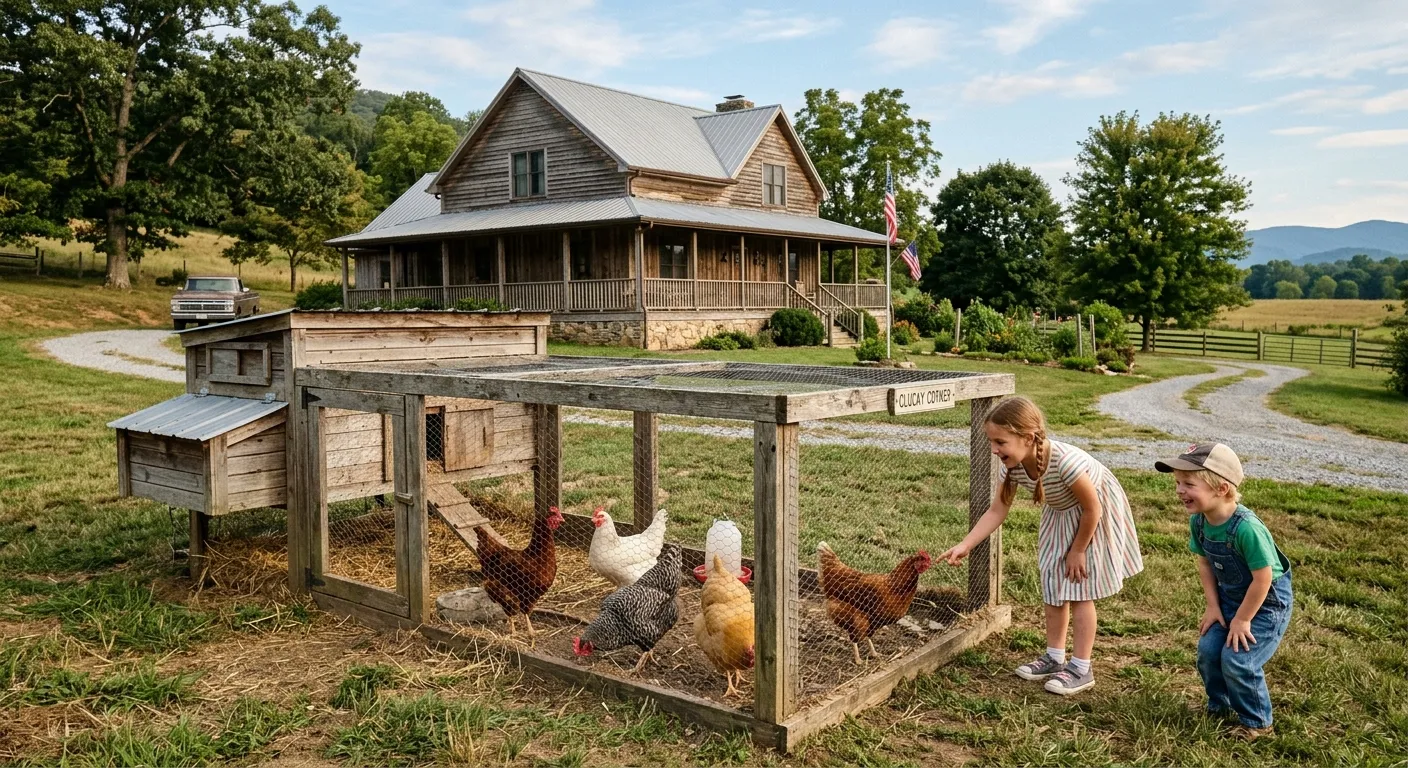
The coops that never get hit are boring on purpose. Nothing in this guide is clever. The boring coop is the one that still has chickens in it.
Start with the dusk walk tonight. The rest can follow, one weekend at a time.
FAQ
Is chicken wire enough to keep raccoons out?
No. Chicken wire keeps chickens in. It was never made to keep a raccoon out. Raccoons reach through it and pull birds against it. Even weasels get through chicken wire. Half-inch hardware cloth, screwed down tight on every opening, is the fix.
Will a dog keep predators away from my chickens?
Usually, yes, with a catch. A dog near the coop does discourage predators and unwanted visitors. The trouble is that the same dog, and any cat, can pick up disease from wildlife and pass it to your birds. So a dog helps. It does not replace the lockup habit, the mesh, or the ground edge.
Can I legally shoot a hawk or owl that’s killing my birds?
No. Hawks and owls are protected by federal law. That does not stop just because the bird is eating your flock. Shooting, trapping, or putting one down is illegal even on your own property. The legal fixes are the ones above, plus a call to your wildlife service.
Omlet Eglu Cube Review: What $1,399 Actually Buys
Omlet's Eglu Cube starts at $1,399 with no run, needs no maintenance, rolls on wheels, and handles winter. It's our standout pick in its price bracket.
Best Chicken Coop Bedding: What Each Bag Really Covers
Hemp, pine, straw, or pellets: coop bedding priced per square foot of coverage and per full fill, with the pine shipping trap most charts miss.