Hardware Cloth vs. Chicken Wire: Which Keeps Predators Out?
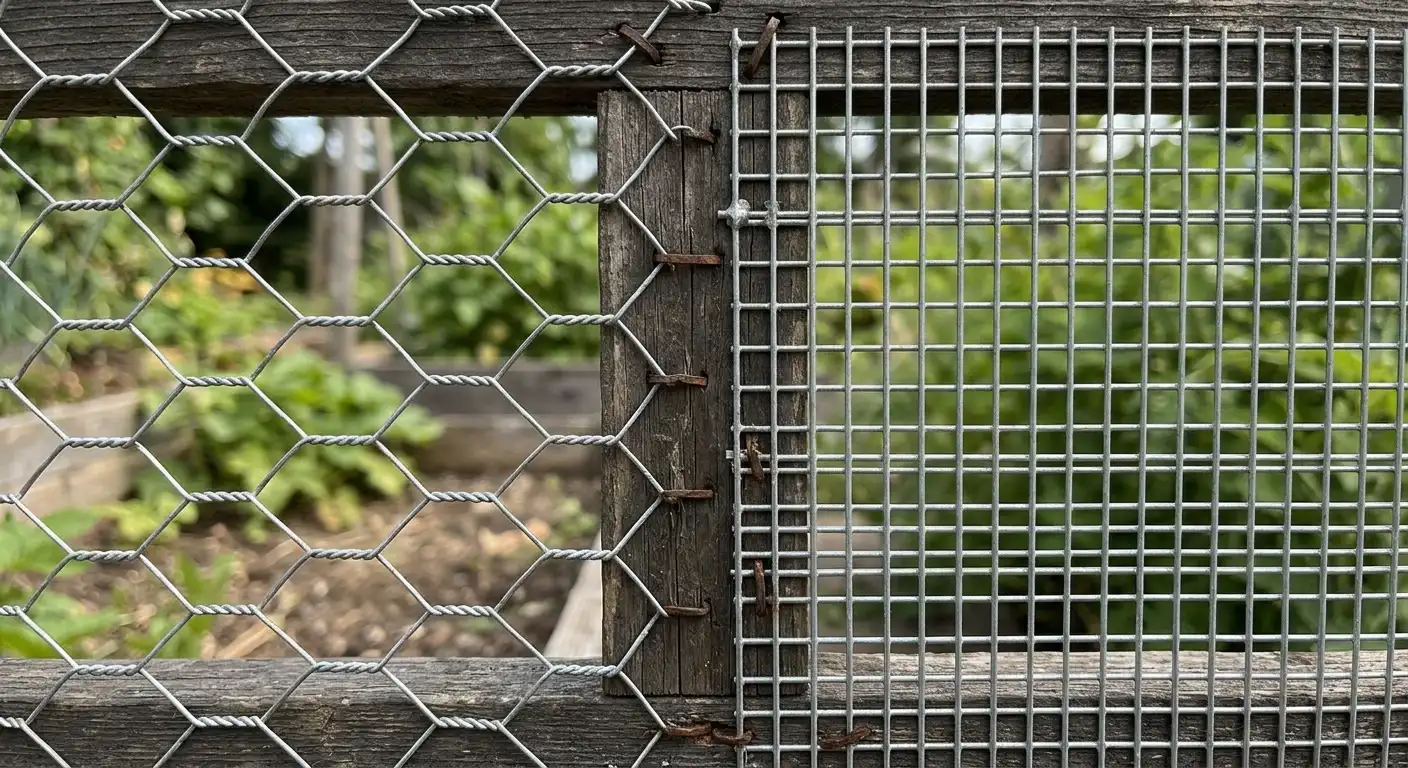
A coop kit arrived in October with a roll of thin, hex-shaped wire. The listing called the kit “predator-proof.” That sounds reassuring. But the wire matters: chicken wire is made to keep chickens in. It is not made to keep predators out.
I started looking into this after seeing a raccoon in the neighborhood and ordering a prefab coop. I kept seeing advice to “upgrade the mesh,” but no one said what to buy. This guide covers the basics: which wire helps against which animals, what the label means, where installs go wrong, and how to upgrade a run that already has chicken wire.
Two kinds of wire, two different jobs
Chicken wire is made from thin, zinc-coated wire twisted into hexagons. The twists make it flexible. A strong animal can pull at the joints and loosen them.
Hardware cloth is made from stronger wire welded into a grid. It holds its shape and is harder to bend.
That difference matters. Extension guides name hardware cloth as a good choice for keeping predators out. The eXtension predator guide says least weasels can squeeze through holes as small as a quarter inch. Chicken wire won’t stop them (eXtension predator guide). Rats can get through it, too. The University of California warns against using light chicken wire because rats can pass through its holes (UC IPM rat guide).
Chicken wire still has its uses. It works well for splitting a run, fencing a garden bed, or keeping chicks in one place. Just don’t use it as the main shield between your birds and an animal that can bite, reach, or dig its way in.
Half-inch mesh: helps stop raccoons from reaching in
Ask chicken keepers what mesh to use, and many will say half-inch hardware cloth. Raccoons are a common worry. Extension guides warn that raccoons can reach through wire and pull at birds (eXtension). Maryland Extension warns that raccoons can reach through mesh pens and hurt nearby birds (UMD predator guide).
Half-inch welded openings are small enough to help stop this kind of reach-through. Use the mesh on every opening an animal can reach: nearby windows, vents, and gaps along the floor. Our six-hen coop guide and four-hen guide recommend the same thing.
Quarter-inch mesh: helps keep out smaller animals
Quarter-inch mesh has smaller holes. It can help keep out animals that can fit through half-inch holes. Weasels are one example. A least weasel can fit through a quarter-inch opening.
Snakes are another common worry. But the extension guide says snakes small enough to fit through holes a quarter inch or smaller usually don’t harm chickens (eXtension). Larger gaps may let in snakes that can cause problems. Maryland Extension says to keep gaps bigger than a quarter inch away from roosts (UMD). Fine mesh can also keep wild birds out of an open coop. That may help lower the risk of disease (UMD).
There’s one trade-off with quarter-inch mesh: the wire may be thinner. Check both the hole size and the wire thickness.
Check the label: wire thickness and coating
The wire thickness is called its gauge. A lower number means thicker wire. Thicker wire is harder to bend, pry, or chew through.
Half-inch hardware cloth is often sold in 19 gauge. Howard Wire, a California wire maker, lists half-inch, 19-gauge cloth with openings about 0.46 inches wide (product details). Quarter-inch mesh often comes in thinner 23-gauge wire. So when you choose smaller holes, check the wire, too. The University of California recommends 18- or 19-gauge wire cloth for vents and windows where rats are a concern (UC IPM).
Check the coating, too. “Galvanized” means the steel has a zinc coat to help slow rust. Many store rolls also have a black PVC coating. When I looked at products for this article, black PVC-coated, half-inch, 19-gauge cloth was the most common type. See the product search here.
Where a good mesh install can fail
The wire is often not the weak spot. The way it’s put up is.
First, fasten it well. Staples can pull loose. Use screws instead. Add a thin wood strip to hold the mesh flat over openings. Our winter ventilation guide shows this on coop vents. The mesh needs to sit flat and tight.
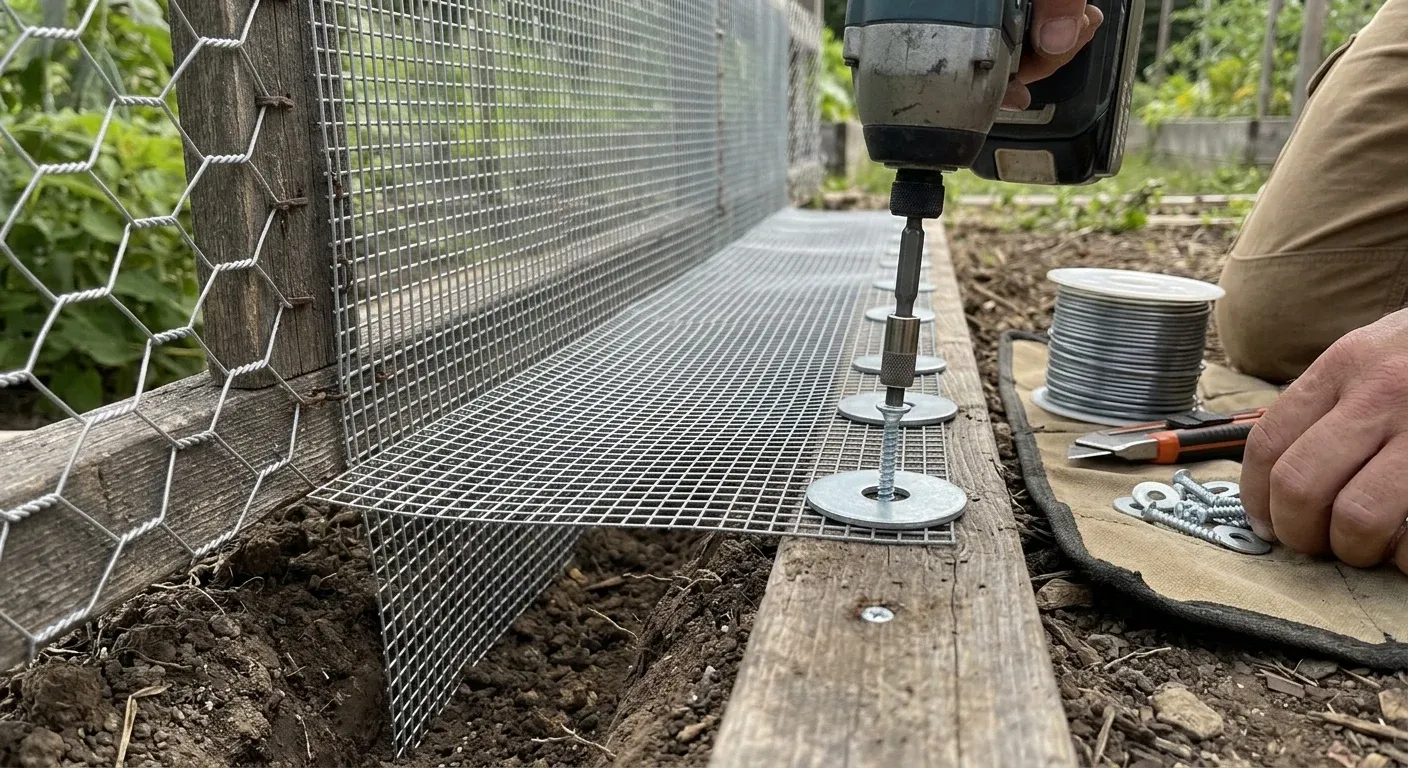
Next, cover every gap. Check the run walls, nearby windows, vents, and ground edges. Our automatic door guide makes the same point: even a good door can leave a gap if it’s not fitted well. Predators test the edges and seams.
Secure the ground edge. Both extension guides suggest burying hardware cloth to stop animals from digging under it. eXtension suggests burying it 12 inches. Maryland Extension suggests a trench 12 to 18 inches deep around the coop (eXtension; UMD). Digging a trench takes work. But it can stop a dog or fox from getting under the run.
Cover the top if hawks or owls are a problem. A covered run is the simplest way to protect birds from them. Make sure the cover is tight and secure. Hawks can get through loose or weak spots (eXtension). Hardware cloth holds its shape. Chicken wire can sag and leave loose pockets.
| Animal | Mesh or cover | Why | Source |
|---|---|---|---|
| Raccoon | ½-inch hardware cloth | Helps stop raccoons from reaching birds | eXtension, UMD |
| Weasel | ¼-inch hardware cloth | Least weasels can fit through ¼-inch holes | eXtension |
| Snake | No gaps bigger than ¼ inch near roosts | Larger gaps may let in snakes that can cause problems | eXtension, UMD |
| Rat | ¼-inch mesh where needed | UC IPM says to seal holes bigger than ¼ inch | UC IPM |
| Hawk / owl | A tight, secure cover | Hawks can get through loose or weak spots | eXtension |
If your run already has chicken wire
Many people learn about the risk after the coop is built. The run is wrapped in chicken wire, then they read about raccoons. Their first thought may be to rip it all off. You may not need to do that. Make upgrades in steps, and keep the chicken wire where it’s still useful.
A simple order: fix the latches first. Then cover gaps an animal can reach. Next, secure the ground edge. Do the top last, unless hawks are already a problem. Keep chicken wire for jobs like dividing a run, fencing a garden, or keeping chicks in. Replace it with hardware cloth wherever a predator can reach the coop. Do one section at a time, so your flock still has a safe place to sleep.
That order is the mesh-first slice of a bigger job. If you’re starting from a loss, our predator-proofing guide shows how to read the scene and match the fix to the animal that got in.
What does the upgrade cost?
Hardware cloth costs more than chicken wire for the same length. A full run may need a big roll. But don’t compare only the price of the wire. Think about what it could cost to lose birds to a predator. Our Flock Economics calculator can help you estimate the value of the eggs from your hens.
Two things can help you spend wisely. First, buy the right mesh once: half-inch, 19-gauge, galvanized cloth. That may cost less than buying light wire twice. Second, plan how you’ll fasten it before you unroll it. Fixing a poor install later can cost another afternoon.
Wrapping Up
Here’s the short version I give neighbors: chicken wire keeps chickens in; hardware cloth helps keep predators out. Use half-inch, 19-gauge cloth on openings an animal can reach. Use quarter-inch mesh where smaller animals or rats are a concern. Secure the ground edge and fasten every seam so it can’t be pulled loose. It takes some work, often an afternoon with a drill, but it can help you feel better when you lock up the coop at night.
FAQ
Will half-inch hardware cloth keep rats out?
Not by itself. The University of California says young rats can squeeze under a door with a gap as small as half an inch. It recommends sealing holes bigger than a quarter inch (UC IPM). Half-inch cloth helps with larger predators. For rats, you may need quarter-inch mesh along the lower edges and tight seals around doors. Keep feed tidy, too. Spilled feed attracts rats. Our no-waste feeder guide covers that part of the problem.
Can I use chicken wire on top of a run?
It’s not the strongest choice. Extension guides suggest covering the run if hawks are a problem. They also say the cover must be secure, because hawks can get through weak or loose spots. Chicken wire can sag between supports. That can leave weak spots. If hawks or owls are common in your area, move a secure cover higher on your to-do list.
Can I mix half-inch and quarter-inch mesh?
Yes. The two sizes do different jobs. Half-inch mesh on the walls helps stop animals from reaching through. Quarter-inch mesh on lower edges, vents, and windows can help keep out smaller animals and rats. Where the two sizes meet, overlap and fasten both pieces well. Animals are more likely to test a seam than the middle of a panel.
Omlet Eglu Cube Review: What $1,399 Actually Buys
Omlet's Eglu Cube starts at $1,399 with no run, needs no maintenance, rolls on wheels, and handles winter. It's our standout pick in its price bracket.
What Killed My Chickens? A Guide to the Five Ways In
Predators get in five ways: dig, reach, squeeze, drop in, or work the latch. Read the signs, match the fix, one weekend at a time.