Breed profile
Silkie
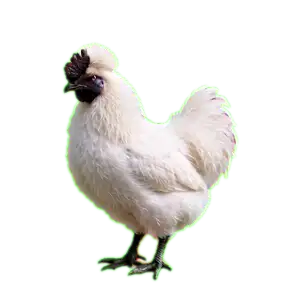
The pet that hatches everyone else's eggs. Silkies are Chinese bantams with black skin, five toes, and a fluffy walnut-combed profile, shown as bantams in the United States. Egg output is modest: about 100 eggs in an ideal year, and the phrase ideal is doing real work, because their extreme broodiness interrupts laying constantly. People don't keep Silkies for the basket. They keep them because a calm, doll-sized bird that will hatch ducklings is worth the floor space.
The egg numbers
| Eggs per year (first laying year) | 100 |
|---|---|
| In-lay rate | ≈2 a week |
| Strain note | A Silkie hen can produce 100 eggs in an ideal year, white to cream or light tan, with production often interrupted by extreme broodiness. Hatchery tables grade the output as fair. |
| Egg color | tinted |
| Egg size | small |
| Starts laying | 24–30 weeks |
Body and climate
| Form | bantam |
|---|---|
| Strain | heritage |
| APA class | Asiatic (bantam in the US) |
| Comb | walnut |
| Leg feathering | feathered |
| Leg color | black |
| Distinguishing features | black skin and bones · blue earlobes · five toes (pentadactyly) · bearded and non-bearded forms |
| Bird size | small |
| Skin color | black, brown or blue |
| Recognized varieties | The Entente Européenne recognises 10 plumage colours, the APA seven and the Poultry Club of Great Britain five; the United States shows only the bantam. |
| Mature hen weight | 2 lb |
| Mature rooster weight | 2.25 lb |
| Weight note | The APA bantam standard calls for 36 oz males and 32 oz females (about 2.25 and 2 lb); hatchery flocks run 2.5 and 2 lb, and the European standard-sized bird is bigger (males to about 4 lb). |
| Heat tolerance | good |
| Climate note | Sources disagree and the page publishes the split: one hatchery flags Silkies as 'sensitive to extreme temperatures' and 'not cold-hardy', while another's spec table grades cold tolerance excellent and heat tolerance better. The silky feathering lacks functioning barbicels, so winter planning should take the cautious read. |
Character
| Temperament | Docile and calm; a pet-class bird. |
|---|---|
| Disposition | best |
| Free range | poor |
| Meat production | poor |
| Broodiness | high |
| Broody note | Silkies show a strong tendency to broodiness and are commonly used to hatch eggs from other breeds and bird species. |
| Good first breed | Yes |
What this means for your setup
Small birds, small footprint: hatchery flocks run 2 to 2.5 pounds, so coop math is trivial next to a Brahma. Plan the broodiness instead of the eggs; if you keep a Silkie, you keep a living incubator, and keepers exploit exactly that to raise other birds' offspring. Crest and feathering also argue for covered runs and dry bedding; on cold hardiness the hatcheries disagree (one table grades it excellent, another page flags the breed as not cold-hardy), so winter them on the cautious side.
Gear that fits this breed
Coop Size Calculator
turn 2-lb hens into coop, run and roost numbers
Egg Calculator
turn the 100 egg-a-year range into a hen count
Brooder Temperature Chart
a broody breed hatches chicks, and chicks need the week-by-week heat schedule
Silkie FAQ
How many eggs do Silkies lay a year?
A Silkie hen can produce 100 eggs in an ideal year, often fewer in practice because broodiness interrupts laying.
Are Silkies good mothers?
That's the job. Silkies brood strongly and are commonly used to hatch eggs from other breeds and even other bird species.
How big do Silkies get?
Per the APA bantam standard: about 2 1/4 lb for males and 2 lb for females; hatchery flocks run 2.5 and 2 lb.