Breed profile
Australorp
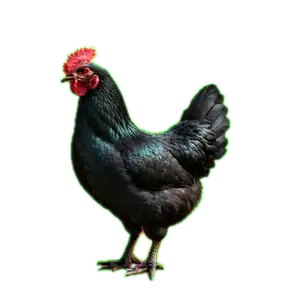
The Orpington's Australian cousin, rebuilt for output. Selective breeding for egg-laying turned Black Orpington stock into the Australorp, and the numbers made history: in 1922-23 a team of six hens averaged 309.5 eggs each across a 365-day trial. Modern backyard birds land closer to the extension chart, 200 to 280 brown eggs a year. You get Orpington-adjacent temperament in a slightly leaner package.
The egg numbers
| Eggs per year (first laying year) | 200–280 |
|---|---|
| In-lay rate | ≈4–5 a week |
| Egg weight | 55 g |
| Strain note | University extension chart: 200-280. Some hens lay more than 300, and the 1922-23 world-record trial averaged 309.5 eggs per hen; a modern published average runs about 190. The hatchery spec table adds a breeder-flock three-year average of 226. |
| Egg color | brown |
| Egg size | large |
| Starts laying | 20–24 weeks |
| Winter laying | moderate |
| Persistence | Hatchery pages credit persistence in laying 'especially in hot weather' and note the hens often keep laying into winter; the 1922-23 record trial is behind the reputation. |
Body and climate
| Form | standard |
|---|---|
| Strain | heritage |
| APA class | English |
| Comb | single |
| Leg feathering | clean |
| Leg color | black |
| Bird size | medium |
| Skin color | white |
| Recognized varieties | Black is the only colour recognised in the United States; blue and white are also recognised in Australia. |
| Weeks to maturity | 20 |
| Mature hen weight | 6.5 lb |
| Mature rooster weight | 8.5 lb |
| Weight note | Standard ranges: females 2.25-3.10 kg (5-6.8 lb), males 3.20-4.10 kg (7-9 lb); rounded midpoints shown. |
| Cold hardiness | excellent |
| Heat tolerance | good |
| Climate note | The hatchery Q&A calls them an excellent cold climate breed; the spec table grades cold tolerance best and heat tolerance good. |
Character
| Temperament | Docile and quiet; dual-purpose eggs and meat. |
|---|---|
| Disposition | best |
| Free range | excellent |
| Meat production | better |
| Broodiness | moderate |
| Broody note | Sources disagree: two hatchery tables list Broodiness: Yes, while a third grades them not very likely to sit. |
| Good first breed | Yes |
What this means for your setup
Plan for a mid-heavy bird: hens around 6.5 pounds, roosters toward 9, so the generous end of the coop-size math applies here too. Neither source I checked grades cold hardiness for this breed specifically, so winter care should follow the general heavy-breed playbook: dry bedding, draft-free ventilation, heated water. If you read the record figures and expect 300 eggs, read the fine print too; the modern average runs near 190.
Gear that fits this breed
Coop Size Calculator
turn 6.5-lb hens into coop, run and roost numbers
Egg Calculator
turn the 200–280 egg-a-year range into a hen count
Best Coops for Cold Climates
a cold-excellent breed earns the winter-spec picks
How Much Space Chickens Need
heavy fowl are the reason the generous end of the space math exists
Australorp FAQ
How many eggs do Australorps lay a year?
The extension chart says 200-280 brown eggs a year. The famous 1922-23 record trial averaged 309.5 eggs per hen, but a modern average runs about 190, so strain matters.
Are Australorps related to Orpingtons?
Yes. The Australorp derives from the British Black Orpington, selectively bred for laying performance in Australia.
How big do Australorps get?
Standard ranges run 5-6.8 lb for hens and 7-9 lb for roosters.