Breed profile
New Hampshire Red
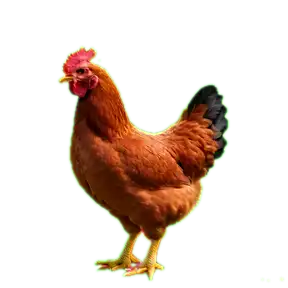
The Rhode Island Red's fast-maturing cousin. New Hampshire Reds were selected out of RIR stock in their namesake state for earlier maturity and feathering, and published figures have hens laying about 220 brown eggs of 55 g each in a year. The birds run the same class as their parent breed, 6.5-pound hens and 8.5-pound roosters. In a backyard lineup the breed reads as a RIR with a touch more broodiness and mothering.
The egg numbers
| Eggs per year (first laying year) | 200–240 |
|---|---|
| In-lay rate | ≈4–5 a week |
| Egg weight | 55 g |
| Strain note | Published figures: hens lay approximately 220 brown eggs per year, averaging about 55 g. Rounded to the 200-240 band for chart comparability. |
| Egg color | brown |
| Egg size | large |
| Starts laying | 20–24 weeks |
Body and climate
| Form | standard |
|---|---|
| Strain | heritage |
| APA class | American |
| Comb | single |
| Leg feathering | clean |
| Leg color | yellow |
| Distinguishing features | designated the official poultry of New Hampshire in 2018 · light-to-medium red plumage that may fade in sunlight |
| Bird size | extra large |
| Skin color | yellow |
| Recognized varieties | Only the red color is recognized in the US and UK; the Entente Européenne lists two more, white and blue-tailed red. |
| Conservation status | Threatened |
| Weeks to maturity | 20 |
| Mature hen weight | 6.5 lb |
| Mature rooster weight | 8.5 lb |
| Weight note | Males about 3.9 kg (8.5 lb), hens approximately 3.0 kg (6.5 lb). |
| Cold hardiness | excellent |
| Heat tolerance | good |
| Climate note | Hatchery page: hardy in all climates, but the combs can be frostbite-prone in the harshest winter weather. |
Character
| Temperament | A fast-feathering, early-maturing farm bird. |
|---|---|
| Disposition | better |
| Free range | good |
| Meat production | better |
| Broodiness | moderate |
| Broody note | They sit well, and are good mothers. |
| Good first breed | Yes |
What this means for your setup
Housing math matches the Rhode Island Red: mid-heavy birds, three-square-feet-plus per hen by the extension floor-space guidance. The mothering trait — they sit well and are good mothers — is the practical difference from a production-strain RIR; useful if you want a self-replacing flock, an annoyance if you want steady eggs. The extension laying chart doesn't list this breed separately, so the 220 figure traces to breed references rather than extension backing.
Gear that fits this breed
Coop Size Calculator
turn 6.5-lb hens into coop, run and roost numbers
Egg Calculator
turn the 200–240 egg-a-year range into a hen count
Best Coops for Cold Climates
a cold-excellent breed earns the winter-spec picks
How Much Space Chickens Need
heavy fowl are the reason the generous end of the space math exists
New Hampshire Red FAQ
How many eggs do New Hampshire Reds lay?
Expect approximately 220 brown eggs per year at about 55 g each.
Are New Hampshire Reds related to Rhode Island Reds?
Yes; the breed was developed from Rhode Island Red stock, selected for earlier maturity and fast feathering.
Do New Hampshire Reds go broody?
They sit well and are good mothers, more so than production-strain Rhode Island Reds.