How Many Chickens Should I Get?
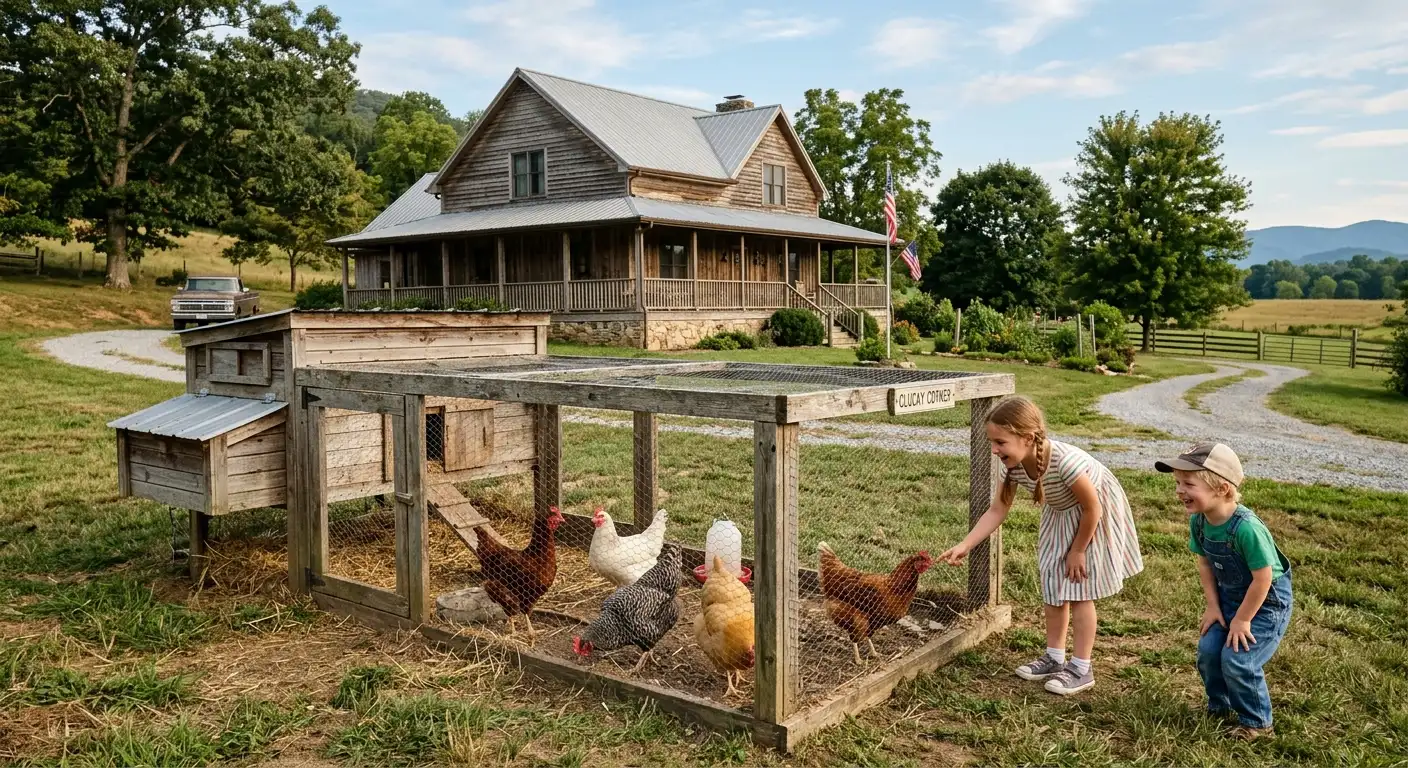
“How many chickens should I get?” usually gets answered with a number, most often “three to six,” and that number can’t help you, because nobody did any work to come up with it. The real answer comes out of three smaller questions. You can run all three in one evening with a grocery receipt, a tape measure, and your town’s code pulled up on a phone.
That’s how we ran ours: two kids who go through eggs like it’s their job, one decent corner of the yard, and a spreadsheet more elaborate than I’d ever admit. Here’s the arithmetic and where every number comes from, so you can run yours.
First question: how many eggs does your kitchen actually go through?
Count a real week, not a guessed one. Pull the last grocery receipt. Our house lands around two dozen a week, mostly breakfast and weekend baking, and that number set the whole plan.

Then translate dozens into hens. New Hampshire Extension’s egg numbers are blunt in a useful way: ten good layers give you about nine eggs a day once they all get going, easing to six or seven a day after 13 months of production. Breed decides most of the spread. Our breed profiles carry the per-breed laying numbers if you’re narrowing down a breed.
The New Hampshire chart runs from 250 to 300 eggs a year for White Leghorns down to 100 to 160 for Standard Cochins. Dual-purpose breeds sit in the middle: Rhode Island Reds at 250 to 280, Barred Rocks at 200 to 280. Pennsylvania State University puts old heritage types as low as 50 to 100 a year.
Run your weekly egg count through that:
| Eggs per week | Production layers (Leghorns, sex-links) | Dual-purpose (Rocks, Reds, Orpingtons) | Easter Eggers & Cochins |
|---|---|---|---|
| 1 dozen | 3 | 3 | 4 to 5 |
| 2 dozen | 5 | 6 | 7 to 10 |
| 3 dozen | 7 | 8 | 10 to 12 |
First-year rates, averaged across the laying year. Two honesty notes: these are averages, and averages hide winter. Run any weekly number through the egg calculator; it covers the breed range, the winter gap, and the year-two ease-off in one pass.
Winter is the part that surprises first-year keepers. Hens follow daylight, and once it drops below roughly 14 hours a day, laying slows down hard. Leave the lights off in a northern state, and New Hampshire Extension expects a flock to quit laying entirely and molt before October 31, dropping feathers and shutting down for the winter. Their fix, if you want eggs through winter, is plain: a 25-watt bulb on a timer, stretching the day to 14 hours from September 1 to May 1. Penn State’s range agrees: layers want 14 to 16 hours of light. Our plan is to skip the light the first winter and buy eggs in December like a person with no chickens, then decide whether January eggs are worth the timer and the cord. That call has its own guide. Plenty of people just accept the gap.
Second question: how many birds does your coop actually hold?
Whatever number the egg math gave you, the coop can veto it. Sellers rate coops generously: two or three square feet per bird. We re-rate them at four square feet, the strict top of the extension range (3 to 4 sq ft inside, 10 outside), because a seller’s “sleeps 6!” sticker and birds that don’t feather-pick each other are two different standards. At four square feet, a 16 sq ft “6-chicken” coop is a 4-hen coop, and now your egg math re-runs.
The full space standards, including run sizes and roost bar lengths, live in our space guide. The re-rated capacity dataset shows what real coops hold once you measure them. The Coop Size Calculator runs it in reverse: tell it the flock you want, and it sizes the coop, or feed it a coop you’re considering and see what it honestly houses.
One planning habit worth stealing: size for the flock you’ll have in year two, not the one in the brooder. Why that flock grows is the next section.
Third question: what does your town allow?
Penn State’s guide for small flocks puts this before every other piece of advice: check local ordinances, zoning, and association rules before the birds arrive. The clauses that bite come in three kinds: a hen cap, a setback for the coop (how far it has to sit from the property line), and whether roosters are allowed at all. You don’t need a rooster for eggs; hens lay with no male present, period. But if your cap is six hens, your whole egg math re-runs at six. Better to know that before the feed store’s chick season than after.
Why every keeper tells you to get more than you planned
Three reasons, and they compound.
Chicks from a straight-run bin are unsexed, so roughly half will turn out to be roosters, and a rooster doesn’t lay. Want guaranteed hens? Buy sex-link chicks or started pullets and pay extra for the certainty. Sex-links are hybrids you can sort by color at hatch; started pullets are young hens already close to laying. Count the hens you’ll actually end up with, and remember some chicks won’t make it to laying age. That’s the sad arithmetic of spring.
Adding birds later is harder than starting with the right number. Penn State’s advice on flock health is one line: never introduce adult birds into an established flock. People do it anyway, with quarantine pens and adjacent runs where the two groups watch each other for weeks, because the pecking order, the ranking that decides who eats first, doesn’t hand out welcome packages. Disease risk and bullying are both real. If six is the number you want, start with six. Don’t start with three and negotiate the merger later.
And there’s chicken math, the community’s own running joke about how “we’ll stop at four” becomes nine birds and a duck. It has a name because it happens constantly. A chicken math thread from November 2025 collects the usual arcs. One reply, from a keeper with almost 6,000 posts on the forum, runs the whole curve:
We only wanted a few chickens, you know 6 or 8 for fresh eggs, that was the plan anyway. That plan didn’t last long, we ended up well over 20 chickens that first year, over 30 the second, a few years down the road and now this year we went over 150.
Build the coop as if the flock will grow: our space guide covers sizing for year two, and the 4-hen and 6-hen coop guides re-rate the popular boxes so the sticker number doesn’t decide for you.
What each hen costs, since you’re counting
New Hampshire Extension prices it out: each hen produces about 20 dozen eggs in her first 13 months and eats 90 to 100 pounds of feed doing it. For a 10-hen flock, a 50-pound bag should last two to three weeks. Their waste check is worth taping to the feed bin: if 50 pounds disappears in under two weeks, either the feeder is letting hens spill it or something else is eating from it. Both suspects are exactly why no-waste feeders exist as a category. Cold weather adds up to 25 percent to the bill.
Run your own number in the Feed Cost Calculator. For the whole bill (start-up, feed, and the store price you’re replacing), run the Flock Economics Calculator. As for the dream of cheap eggs from your own yard, Penn State will wake you from it in one sentence: producing eggs in small flocks will always cost more than buying them. If cheaper eggs are the only reason for chickens, the math just told you no. The reasons that survive the math are the real ones: a kid who collects eggs before school without being asked, and a compost pile that finally heats up.
The long game nobody budgets for
A hen lays hard for two or three years, tapers off, and keeps eating. That 10-hen flock drops from nine eggs a day to six or seven by month 13. Meanwhile the birds live on: Penn State’s figures put backyard hens at around eight years, sometimes 12 to 15. So the number you pick this spring is really a decade of pets with a few heavy laying years attached. Some people just keep the retirees. Others add young pullets every couple of years, which means running the whole introduction dance again. A third group runs the winter light and pushes production through December. None of those choices is wrong. Being blindsided is.
FAQ
Do I need a rooster to get eggs?
No. Hens lay with or without a male around, as Penn State says plainly. A rooster gets you fertile eggs and a 4 a.m. crow; whether he’s even legal is one more thing your local ordinance decides.
Can I just get two chickens?
Two can work in a small yard, but chickens are flock animals, and the margin is thin. Lose one and you’ve got a single stressed hen, and the fix means introducing a new adult to a tiny flock, the exact situation the extension warnings cover. Every starter guide we read while researching this drew the floor at three. BYC’s own beginner article opens at three to six birds, and when a longtime keeper in the chicken math thread above was asked about three or four, the answer was “I would only get three birds.”
How many chickens for a family of four?
Depends on the eggs, not the family size. Around two dozen a week puts you at five or six dual-purpose hens, or four or five production layers, before winter. The table above covers other weekly totals.
How long until we actually get eggs?
About five months from chick to first egg, per New Hampshire Extension’s timeline. Spring chicks mean eggs by mid-to-late summer. Buying five-month-old started pullets skips the wait and the brooder at a higher price per bird, and the heat plate vs heat lamp decision only matters if you start with chicks.
Next moves
- Egg Calculator for the hen count, Coop Size Calculator for the coop, Feed Cost Calculator for the yearly bill.
- Coop Capacity Checker to re-rate a coop you’re eyeing.
- The space guide for run sizes, roost bars, and sizing for year two.
Sources
- Producing Your Own Eggs (ten hens laying nine eggs a day, the 13-month ease-off, 20 dozen eggs and 90-100 lb feed per hen, breed laying chart, the 14-hour light schedule and October 31 molt date, five months to first egg)
- Successfully raising a small flock of laying chickens (no rooster needed for eggs, never introduce adult birds to an established flock, 14-16 hours of light, heritage vs sex-link laying rates, eight-year lifespan, small-flock eggs always cost more, check ordinances first)
- How Should I Take Care of Backyard Chickens in the Winter? (laying slows below about 14 hours of daylight, up to 25 percent more feed in cold weather)
- Space allowances in housing for small and backyard poultry flocks (the 3-4 sq ft indoor and 10 sq ft outdoor range our strict 4 sq ft re-rating comes from)
- Community cross-check: BackYard Chickens “Chicken Math” thread (started November 2025, replies still coming in; the 6-to-150 flock arc quoted in the body and the three-bird floor answer in the FAQ)
- Community cross-check: BYC article “How Many Chickens Should You Raise?” (April 2022; the three-to-six opening band cited in the FAQ)
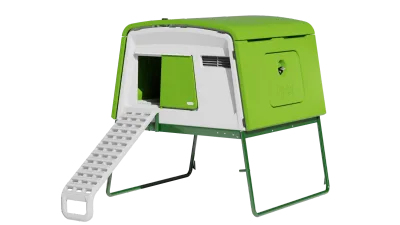
Omlet Eglu Cube Review: What $1,399 Actually Buys
Omlet's Eglu Cube starts at $1,399 with no run, needs no maintenance, rolls on wheels, and handles winter. It's our standout pick in its price bracket.

What Killed My Chickens? A Guide to the Five Ways In
Predators get in five ways: dig, reach, squeeze, drop in, or work the latch. Read the signs, match the fix, one weekend at a time.